
A FORTIFIED Roof is a roof built to a voluntary storm standard from the Insurance Institute for Business & Home Safety (IBHS), the research group funded by the insurance industry. It is not a material. It is a set of upgrades to how the roof is attached, sealed and edged, checked by an independent evaluator before you get a certificate. FORTIFIED says a re-roof to the standard typically adds $1,000 to $3,000 for a 2,000-square-foot home, and that insurers sometimes discount the wind part of your premium for a certified roof. Whether yours does depends on your insurer, so ask before you pay.
This guide explains what the standard asks for, who certifies it, what it costs and what a certificate does and does not buy you.
What a FORTIFIED Roof requires
FORTIFIED's roof page lists four core changes. They are done together, during a re-roof or on a new build.
| Part of the roof | What the standard asks for | Why it matters in wind |
|---|---|---|
| Roof edges | A wider drip edge and a fully adhered starter strip | Wind lifts a roof first at the edges, so these are locked down |
| Roof deck | A sealed deck, so water cannot pass through the seams between panels if the covering is lost | The roof can still shed rain after the shingles are gone |
| Nailing | Ring-shank nails in a tighter pattern than a standard job | FORTIFIED says this can double the uplift the deck resists |
| Roof covering | A product tested and rated for wind; for asphalt shingles, ASTM D3161 Class F or ASTM D7158 Class H | The covering is the part you can see, but it is only one layer |
Metal, tile and low-slope coverings are not held to those shingle classes. FORTIFIED asks that they be tested for the design pressures of the site. Our guide to storm damage to your roof explains how wind lifts shingles, and the guide to decking and underlayment covers the sealed deck in more detail.
FORTIFIED also lists optional or extra items: wind- and rain-resistant attic vents, chimney bracing, gable end bracing, anchored attached structures such as porches, and pressure-rated garage doors. In areas prone to hurricanes it adds impact- and pressure-rated windows and doors, stronger exterior sheathing and reinforced soffits. A FORTIFIED Roof is the first and smallest step. FORTIFIED says it is required at every designation level, so the Silver and Gold levels build on it.
An optional hail supplement asks for a covering with a good impact rating. For asphalt shingles that means a Good or Excellent rating on the IBHS hail ratings. For metal and low-slope roofs it is UL 2218 Class 4, and for tile FM 4473 Class 4. Our guide to Class 4 impact-resistant shingles explains those tests.
What a wind rating means, and what it does not
The two shingle ratings named above come from lab tests. According to NRCA's Professional Roofing magazine (September 2018), ASTM D3161 blows air across shingles on a test deck for two hours, at 60, 90 or 110 mph, and these pass as Class A, D and F. ASTM D7158 instead calculates the uplift force wind puts on a shingle and compares it with the shingle's own resistance. Its Class H is the top rating.
The same article cites the D3161 standard itself: its results "do not directly correlate to wind speeds experienced in service." The test ignores your building's height, exposure and risk category. Treat a rating as a way to compare products, not as a promise that the roof will survive a particular storm. The rating also assumes the shingle was nailed and sealed as the maker requires, which is part of why FORTIFIED inspects the work.
How a roof gets certified
You cannot declare your own roof FORTIFIED. The process, as FORTIFIED describes it, has three players.
- A certified FORTIFIED roofing contractor installs the roof. FORTIFIED's FAQ says a certified contractor must do the work for a FORTIFIED Roof, and that builders and other contractors do not currently need certification.
- An independent evaluator is a third party trained in the program. The evaluator documents and verifies the construction as it happens, working with you, your roofer and IBHS. Evaluators gather photographs of each phase, the materials used and manufacturer instructions, according to a program partner's description. Bring the evaluator in before work starts, not after, because covered-up work cannot be photographed later.
- IBHS reviews the file and issues the designation if the work passes.
The evaluator's fee is separate from the roofing bill. FORTIFIED does not publish an amount, and its FAQ says the third-party check is required for the designation that most insurance discounts rely on. Ask the evaluator for the fee in writing.
A designation lasts five years. When it expires you need a redesignation inspection to keep it. FORTIFIED allows a renewal up to a year after expiry at standard fees, and adds a $50 processing fee after that grace period. Many insurers that give a discount require the renewal.
What it costs
FORTIFIED's FAQ gives two figures:
- Re-roofing a 2,000-square-foot home typically costs $1,000 to $3,000 more than a roof without the upgrades.
- Building a new home to the top FORTIFIED level adds roughly 1 to 3 percent to the budget.
It adds that the real number depends on the design of the home and on local code. For scale, our guide to roof replacement cost cites a typical total of $5,900 to $13,400, from HomeAdvisor's June 2026 survey. The figures come from different sources, so use them only for scale. Our drip edge guide shows what that part does.
Ask any roofer who prices a FORTIFIED job for the price in lines: the base roof, the sealed deck, the ring-shank nailing and the starter and edge parts, plus the evaluator fee if it is not in the price.
Insurance discounts: possible, not promised
FORTIFIED says insurers "sometimes" give a discount on the wind portion of your premium, and tells you to ask your agent. Many insurers require the designation to be renewed every five years to keep the discount. A few states have set up endorsement programs, and the amount of help differs by insurer: some cover materials, labor and certification up to a limit, and others pay only the evaluator's cost. At least three carriers offer endorsements at no cost, according to the FAQ.
So treat a discount as a question for your insurer, not as part of the price you are paying for. Ask it:
- Do you give a discount for a FORTIFIED Roof, and on which part of the premium?
- What proof do you need, and does the evaluator's certificate meet it?
- Do you require redesignation, and what happens to the discount if it lapses?
- Does a new roof of any kind, FORTIFIED or not, change the way you see my roof's age? Our guide to roof age and home insurance explains why that matters.
This page is not insurance advice. Your policy and your insurer's filed rates decide what you get.
Does it work in a storm?
The best evidence is a study of one storm. A state insurance department commissioned a university risk and insurance research center to compare homes after Hurricane Sally in 2020, and IBHS summarised it in a news release. The study looked at more than 40,000 properties: conventional homes, homes built to supplemental codes and FORTIFIED homes at the Roof and Gold levels. IBHS reports that FORTIFIED homes had claim severity 15 to 40 percent lower, loss frequency at least 55 percent lower and as much as 74 percent lower, and loss ratios 51 to 72 percent lower.
Read that carefully. It is one storm in one state, the figures combine the Roof and Gold levels, and IBHS itself says the study did not look at the cause. The release suggests the evaluation process may help. Claims for fallen trees were left out because FORTIFIED does not address them. The study was paid for by a state agency that also runs a related grant program, and it was reported by IBHS, which runs FORTIFIED. It is a good sign, not proof for your street.
Is it right for you?
Think about it if you are replacing a roof anyway, you live where high wind is a real risk, and your insurer gives a discount or an endorsement that makes the numbers work. The upgrade costs least when it happens during a re-roof, because the deck is open and the shingles are coming off.
It matters less if your roof is young, if you will move soon and your buyer will not value a certificate, or if wind is not your main storm risk. We did not find published resale data for FORTIFIED roofs, so we make no claim about home value. If hail is the bigger risk where you are, a Class 4 covering may matter more; if wildfire is, see our guide to fire-resistant roofing. For the damage a storm leaves behind, see the storm damage guide above. For other preparation steps, our guide to making a roof ready for high winds goes further.
Frequently asked questions
Is a FORTIFIED Roof the same as an impact-resistant roof?
No. Impact rating is about hail. A FORTIFIED Roof is mostly about wind: attachment, sealing and edges. FORTIFIED offers an optional hail supplement that asks for a Class 4 or equivalent covering, but the base standard does not require one.
Can I add FORTIFIED to an existing roof?
The standard applies to re-roofing, new construction and remodels, according to FORTIFIED. The deck upgrades happen while the old covering is off, so in practice that means doing it when the roof is replaced. FORTIFIED does not describe a way to certify a roof without replacing the covering.
Does any roofer qualify?
No. The contractor must be a certified FORTIFIED roofing contractor, according to the FAQ, and the program points to fortifiedproviders.com to find one.
How long does the certificate last?
Five years from issue. After that a redesignation inspection is required to keep the designation. If the roof was replaced or the home changed in that time, the evaluator reviews the changes.
Will my insurer give me a discount?
Maybe. FORTIFIED says insurers sometimes discount the wind premium. Discounts vary by insurer and by state, and some require the designation to be renewed. Ask your own insurer, in writing, before you decide.
Where this information comes from
HomeAnvil does not publish storm or insurance data of its own. Each fact on this page comes from the source named beside it, all read on October 13, 2026:
- FORTIFIED, a program of IBHS, FORTIFIED Roof: the core requirements, the shingle wind-rating classes, the optional hail supplement and the other items. The page shows no update date; its footer reads 2025.
- FORTIFIED, Frequently asked questions: the cost figures, evaluator role, contractor requirement, five-year designation and renewal, and insurance discounts and endorsements.
- FORTIFIED, home page: who runs the program and what a designation involves.
- IBHS, study shows FORTIFIED reduced hurricane damage: the study scope and findings and its caveats. The page shows no date.
- Professional Roofing (NRCA), The wind resistance of shingles, September 1, 2018: how the two ASTM tests work and what they leave out.
- Smart Home America, How to get a FORTIFIED designation: a program partner's account of the evaluator's documents and the audit step. We cite it as a description, not as the program's rule.
Standards and programs change. Check fortifiedhome.org for the current requirements before you sign a contract. Where this page and the program's own documents differ, the program's documents decide. We will update this page when these sources change, and the date above will say when.
Related guides
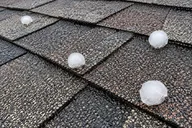 Are Class 4 impact-resistant shingles worth it?Class 4 shingles pass a 2-inch impact test under UL 2218 or FM 4473. IBHS found top-rated ones cost about 9% more per square. What the rating does not promise.
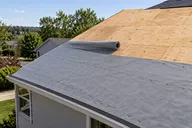 Roof decking and underlayment: what they are and costReplacing roof decking costs $2 to $5 a square foot; a sheet of plywood or OSB runs $9 to $64. How the deck, underlayment and ice barrier work.
 How does your roof's age affect your homeowners insurance?Many insurers inspect or decline roofs over 20 years old, and older roofs are often paid at depreciated value. What to check in your policy and at renewal.
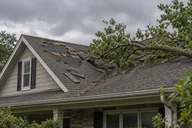 Storm damage to your roof: how to tell and what to doWind damage usually starts at a roof's edges. How to spot lifted, creased and missing shingles and debris damage, and what to do in the first 72 hours.
 What makes a roof fire-resistant?Roofs are rated Class A, B or C for fire under ASTM E108 and UL 790. Asphalt shingles, tile, slate and metal can rate Class A. Why embers and vents matter.
 Drip edge vs gutter apron: what's the difference?Drip edge is required at shingle eaves and rakes by the model code; a gutter apron reaches into the gutter. About $1.50 to $3 a foot during a reroof.
- What help is there for a storm-damaged roof?After a declared disaster, insurance pays first. FEMA home repair aid, Operation Blue Roof tarping and SBA disaster loans can fill gaps. What each is and how to apply.
- How do you make a roof ready for high winds?Wind-ready roofs start with the deck, the nails and the edges, not the shingle alone. What FEMA and IBHS advise, what to ask a roofer, and what to do before a storm.
- What do you do when a tree falls on your roof?Get people out, stay 35 feet from downed lines, call 911 or your utility, then your insurer. Who removes the tree, the usual $500 removal limit and tarping.