
Waves, ripples or raised nails on a new shingle roof are almost always an installation or deck problem, not a bad batch of shingles. The Asphalt Roofing Manufacturers Association (ARMA) says buckling is most often caused by wrinkled underlayment or movement of the wood deck, and that nails driven too high or too deep can cause raised tabs, sealing failures and blow-offs. Some buckling is cosmetic and flattens as the deck dries. A raised nail or a crease is different, because it can break the seal that holds a shingle down. Your first step is to photograph the problem and call the roofer who did the work, while the workmanship warranty is still running.
This guide explains what buckling and nail pops are, what causes each, how to tell a harmless one from a real defect, and who normally pays. It is general information, not legal or insurance advice, and your contract and warranty documents decide your own case.
What buckling and nail pops look like
Buckling is a wavy, rippled or lumpy surface across the shingles. Owens Corning's technical bulletin says shingles bend to follow whatever lies under them, so an uneven deck or a wrinkled layer of underlayment shows through the surface as irregular shapes. The shingles are following the shape of what is under them, rather than being faulty themselves.
A nail pop is a fastener that has risen or was never seated flat. It may show as a small bump in a shingle, a nail head showing, or a tab that sits up instead of lying flat. This guide uses "nail pop" for that visible raised nail. It is not a defined term in the standards we read, so we describe it from what ARMA's nailing bulletin says about nails that are "underdriven" (left standing proud) or "overdriven" (driven so hard they cut into the shingle).
If your problem is on an older roof, such as edges turning up or shingles dishing, read our guide to signs you need a new roof or curling shingles instead. This page is about problems on a roof that is new or nearly new.
Why shingles buckle
ARMA's bulletin on buckled shingles, dated March 2024, says buckling can happen on a new roof or a re-roof and is most often the result of wrinkles in the underlayment or movement of the wood deck. Owens Corning's technical bulletin, printed August 2023, and an underlayment maker's bulletin effective May 2018 agree on the main causes:
| Cause | How it happens | What you tend to see |
|---|---|---|
| Wet deck | Rain or humidity after the old roof is torn off lets the exposed wood absorb moisture and move | Large waves that line up with the joints between deck panels |
| Wrinkled underlayment | Felt that got rained on before shingling wrinkles, or self-adhered underlayment fails to stick in cold, wet conditions | Wrinkles scattered at random, not tied to deck joints |
| Panels set too tight | Wood panels need room to swell; ARMA says decking not spaced at least 1/8 inch apart can buckle | Ridges along panel joints |
| Poor attic ventilation | Moisture builds up under the deck instead of drying out | Buckling that comes back or spreads |
| Uneven deck | Boards or panels that are not flat show through the shingles | Humps in fixed places |
| Compressible layers | Owens Corning names foil-faced insulation blankets laid under the shingles as a cause | Soft, spongy feel in a patch |
| Structural movement | Less often, a building problem unrelated to moisture | Large, obvious disruption |
ARMA gives a way to tell the two main causes apart. If the distortions line up with the seams in the deck, the deck moved. If they are random across the roof and ignore the joints, wrinkled underlayment is more likely. Small, scattered distortions usually come from local problems such as a nail that was not driven flush, a damaged shingle or debris trapped underneath.
The deck-spacing point matters because it is a detail you cannot see once the roof is on. Owens Corning's bulletin cites APA, the engineered wood association, which recommends a gap of at least 1/8 inch and no more than 1/4 inch between panels. APA's own roof page says to leave a 1/8 inch gap and to put shingle underlayment over dry sheathing.
Will buckled shingles flatten out?
Sometimes. The underlayment maker's bulletin says that once the roofing system reaches the proper moisture content, the roof should lay flat and the buckling should not return. That is the case where moisture was trapped during a damp installation and has since dried out. It is not a guarantee. If the cause is panels set too tight, poor ventilation or a wrinkled layer that was shingled over, the ripples stay, and ARMA says a persistent problem needs a professional to look for root causes such as structural issues, fasteners backing out of the deck, or debris under the shingles.
Owens Corning's bulletin says that if better ventilation does not settle the wrinkling, the shingles over the area are removed, the wrinkled underlayment is cut out and replaced, and new shingles go on. It also says to use a licensed or certified roofing professional. ARMA's repair advice is similar: fix the cause first, then lay undamaged shingles flat again or replace any that were damaged.
Why nails pop or sit proud
ARMA's July 2024 bulletin on nailing is blunt: nails that are improperly placed or driven can lead to sealing failures, blow-offs, raised tabs and buckling. It says nails must not be underdriven, overdriven so that they break or cut into the shingle, or driven crookedly, and that the nail head must bear tightly against the shingle. It lists several ways the nailing goes wrong:
- The nail gun is set wrong. ARMA says a pneumatic nailer that is not adjusted properly can cause sealing failures, raised tabs, distortions and blow-offs.
- Nails are too short. ARMA calls for nails long enough to go at least 3/4 inch into the deck, or through thinner sheathing by at least 1/8 inch. Extra layers such as hip and ridge caps count toward how long the nail must be; see our guide to ridge cap shingles.
- Nails hit a hole or a knot. ARMA says not to drive nails into knot holes, cracks or gaps in the deck, because nothing holds them.
- The deck moved later. ARMA names fasteners backing out of the deck as a root cause of persistent buckling. A deck that swells and shrinks with moisture can work nails loose, which is one reason attic ventilation shows up in every bulletin on this subject.
ARMA also says underdriven nails can be tapped down, and that an overdriven or crooked nail should be removed, the hole sealed with asphalt roof cement and another nail placed nearby. If that is not practical, the whole shingle gets replaced. That is guidance for a trained installer; a roof is a risky place for an amateur, so leave it to your roofer.
Is it harmless, or will it leak?
We found no standard that says every ripple leaks, and Owens Corning's bulletin describes buckling as the appearance of waves. Here is a practical way to sort what you see.
| What you see | Likely meaning | What to do |
|---|---|---|
| Gentle waves that match the deck seams, no cracked or lifted shingles | Deck or underlayment movement; may settle as the roof dries | Photograph it and tell your roofer; check the ventilation |
| Waves that are getting worse after each wet spell | Moisture is still being trapped | Ask for an inspection of the attic and the deck |
| One or a few nail heads showing or tabs standing up | Nails driven wrong or backed out | Ask the roofer to fix them promptly; ARMA says repair incorrect nails immediately |
| A cut or torn shingle around a nail | Overdriven nail | Ask for the shingle to be replaced |
| Water stains on the ceiling, damp insulation or wet decking | Water is getting in | Treat as a leak; see roof leak repair |
| Missing or creased shingles after wind | A storm problem, not an installation fault | See wind-damaged shingles |
A raised tab is the part to take seriously. Shingles are held down by factory sealant strips that need warmth to bond, and ARMA's list of problems from bad nailing starts with sealing failures. A shingle that is not sealed is easier for wind to lift, so a pop on a roof facing the weather matters more than a ripple.
Who pays to fix it?
Start with your contractor. Buckling and nail problems are installation matters. NRCA says a contractor's workmanship warranty "will cover installation and related issues," that many contractors offer one or two years, and that there is no industry standard. Read yours in your contract. Our guide to roofing warranties covers what these usually say.
The shingle maker's warranty usually will not. Two 2026 shingle warranties we read both exclude installation that does not follow the maker's instructions. Owens Corning's standard lifetime warranty also excludes damage from "underlying structural failures" and settlement, and from inadequate roof ventilation. CertainTeed's excludes "distortion, cracking or other failure or movement" of the roof deck, along with improper installation. Both cover manufacturing defects only, and both ask you to report a problem within 30 days of finding it. A warranty claim that blames the shingles for a deck problem is unlikely to succeed.
Insurance is a separate question. A fault from the original installation is a workmanship matter, and this guide does not give insurance advice. If you think a storm caused the damage, see wind-damaged shingles and read your policy.
If your roofer will not return or disputes the cause, our guide to the signs of a bad roofing job covers what to document, and roof ventilation helps you check whether the attic could be part of the problem.
What to ask the roofer
These questions help you judge whether the explanation fits the evidence:
- Was the deck wet when the shingles went on? Moisture after tear-off is the leading cause in the bulletins.
- Was the underlayment installed dry and flat? Wrinkles tied to rain or poor adhesion cause random buckling.
- Are the deck panels spaced as the wood maker advises? APA's gap is at least 1/8 inch.
- How is the attic ventilated? Every bulletin links poor ventilation to buckling, and it can also cost you warranty coverage. See roof decking and underlayment for how the layers fit together.
- Who is responsible, and what is the fix in writing? Ask for the cause, the area to be redone, and the timeline.
Frequently asked questions
Is it normal for new shingles to look wavy?
It is common enough that ARMA and shingle makers publish bulletins on it, and they tell you to find the cause. Mild waves from a damp deck may flatten once the roof dries, according to one maker's bulletin. If they do not, ask your roofer to find the cause.
Do popped nails always cause leaks?
No source we read says they do. A raised nail can lift a tab and break its seal, and a nail that cuts through a shingle leaves a hole, so each is worth fixing.
Can I hammer the nails back down myself?
We do not recommend going on the roof. ARMA says an installer can tap down an underdriven nail, but it also says overdriven or crooked nails need removing and the hole sealing. Check your workmanship warranty before anyone else works on the roof.
Does a roofing warranty cover buckling?
Usually the contractor's workmanship warranty does and the shingle maker's does not. The two 2026 shingle warranties we read exclude improper installation, and each lists deck movement or structural failure among its exclusions.
How long should I wait before calling the roofer?
Report it promptly. Both shingle warranties we read require notice within 30 days of discovery, and your contractor's own warranty may have its own terms. Take dated photographs from the ground and from the attic if you can reach it safely.
Where this information comes from
HomeAnvil does not test roofs or publish price data. This page is built from published technical bulletins and warranties, all read on October 13, 2026. We name makers only because their documents are the source, not to recommend any of them. Where we say a figure, it is quoted from the document named.
- ARMA, Plain facts about buckled shingles, posted March 14, 2024: causes of buckling, how to tell deck movement from wrinkled underlayment, panel spacing, ventilation and remedies.
- ARMA, Nail application of asphalt shingles, technical bulletin revised July 2024, read from the copy hosted by a shingle maker: nail size, depth, number and driving, and repair of incorrectly driven nails.
- Owens Corning, Asphalt shingle buckling technical bulletin, printed August 2023: causes of buckling and recommendations.
- Tarco, Buckling of shingles installed over self-adhering underlayments, technical bulletin effective May 15, 2018: moisture, spacing and whether the roof flattens.
- APA, The Engineered Wood Association, Roof systems: the 1/8 inch panel gap and dry sheathing.
- Owens Corning, Standard limited lifetime warranty on roofing shingles and components, for shingles purchased after January 1, 2026: exclusions for installation, ventilation and structural failure, and the 30-day notice.
- CertainTeed, Asphalt shingle limited warranty, 2026: exclusions for improper installation and deck movement, and the 30-day notice.
- NRCA, Resources for consumers, no date shown: workmanship warranties and installation quality.
We will update this page when these sources change, and the date above will say when.
Related guides
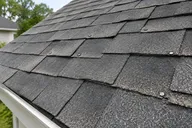 Signs of a bad roofing job, and what to do about itWavy shingle rows, high or exposed nails, missing flashing or drip edge and first-year blisters point to poor work. How to document it and use your warranty.
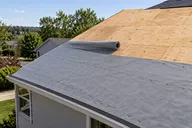 Roof decking and underlayment: what they are and costReplacing roof decking costs $2 to $5 a square foot; a sheet of plywood or OSB runs $9 to $64. How the deck, underlayment and ice barrier work.
 How much attic ventilation does a roof need?Code calls for 1 square foot of net free vent area per 150 square feet of attic, split between intake and exhaust. How vents work, warning signs and costs.
 What does a roof warranty actually cover?A shingle warranty covers manufacturing defects, a contractor's warranty covers installation. How prorating, wind, algae, transfers and voiding work.
 How to find and fix a roof leak, and what it costsA roof leak repair typically costs $350 to $1,500, about $800 on average. How to trace a leak from the attic, what to do first and what each fix costs.
 How much does it cost to replace missing shingles?Replacing a few missing or damaged shingles usually costs $150 to $700. A bundle costs $25 to $40. When a patch becomes a section or a new roof.
- What is an asphalt shingle roof, and is it right for you?Asphalt shingles are the most common home roof. 3-tab starts near $1.50 a square foot, architectural near $3.50. Life, wind, hail and warranty compared.