
Curling shingles are usually a sign of age or moisture, not a quick fix. If the curl is on a few shingles, a roofer can replace them. If it is spread across whole slopes of an older roof, patching rarely pays, and the honest answer is a replacement estimate. On a roof that is only a few years old, curling is not normal: it points to a defect, a ventilation problem or an installation fault, and it is worth a written report before anyone repairs it.
This guide explains the shapes curling takes, what causes each, how to decide between repair and replacement, and where the warranty fits. For the price of replacing a handful of shingles, see how much it costs to replace missing shingles.
What curling looks like
Roofers and inspectors do not use one vocabulary, so the same shingle can get different names. The shapes below are the ones that come up most.
| Shape | What you see | Common name |
|---|---|---|
| Edges lift or turn up or down along the tab | The lower edge of each tab leaves the roof surface | Curling |
| The middle sinks while the edges rise | The tab forms a shallow bowl | Cupping |
| The corners turn down and under | The tab ends look like claws | Clawing |
| The middle of the tab rises | A hump in the center of the tab | Fishmouthing |
InspectAPedia, an inspection reference, notes that cupping and curling show up together on the same roof, and that some inspectors call a cupped shingle "curled." Because the labels overlap, ask a roofer or inspector to describe what they see (edges up, corners down, center sunk) and photograph it. That description matters more than the word.
What causes shingles to curl
Several things push shingles out of shape, and more than one often acts at once.
- Moisture and drying, again and again. InterNACHI, the home inspectors' association, explains that shingles take on moisture from underneath and along their edges, swell, then shrink as they dry. The edges absorb and release more than the middle, so they move more, and the shingle distorts. Repeated cycles can end in delamination, which starts at the edges.
- Age. InterNACHI ties distortion to the normal aging of organic shingle mats, which grow more absorbent as they lose volatiles. InspectAPedia calls cupping a normal wear pattern that appears with shingle age and is seen most on older organic-mat shingles. Our guide to asphalt and fiberglass shingles explains that older mat type.
- Sun exposure. InterNACHI says distortion is often uniform across a slope and is usually worst on the slopes that face south and west, which get the most sun.
- Poor attic ventilation. InspectAPedia says curling can be a symptom of wear or of indoor moisture that the attic does not vent. Shingle makers treat ventilation as part of the roof system, and IKO's limited warranty excludes damage or distortion caused by insufficient attic ventilation. Our guide to roof ventilation covers how to tell whether yours is short.
- Installation or a defective product. InspectAPedia says brand-new shingles should lie flat, and that curling or cupping on a young roof, especially with heavy granule loss, may point to a product defect. It adds that cupping on new shingles might happen if they were laid over a wet deck or over an old layer of cupped or curled shingles. Our guide to roofing over existing shingles covers why a second layer is a risk.
Sources do not agree on how much each cause contributes, and none of them can diagnose your roof from a description. A roofer on the roof, with photos of the attic, is the way to find out.
How serious is it?
Curling is not always a leak today. InspectAPedia says an old cupped roof may not leak yet and may last several more years, depending on its condition. But it is a sign that the roof is wearing out, and distortion is also a path to worse failures: InterNACHI warns that continued wetting and drying leads to delamination.
Curled and cupped shingles are brittle, especially in cold weather. InspectAPedia warns that walking on them can break them and cause leaks. Stay off the roof, look from the ground or with binoculars, and have a professional do the close inspection.
Repair or replace
| What you find | What it usually means |
|---|---|
| A few curled shingles on a roof under 10 years old | Look for a cause (ventilation, a bad batch, installation) before repairing; a repair alone may not last |
| A few curled shingles on an old roof | Replacement of those shingles can buy time, but nearby shingles may be brittle and break as they are lifted |
| Curling across a whole slope, or several slopes | Wear is widespread; ask for a replacement estimate |
| Curling together with bare patches, cracking or missing shingles | The roof is near the end of its life; see signs you need a new roof |
InspectAPedia says it is rare that repairing a badly curled roof is cost-justified, because the surrounding shingles are often brittle enough to break when a roofer lifts them, and coating curled shingles does not make them less fragile. Treat that as one expert's view and ask a roofer to show you, with photos, which shingles can be saved. Our guide on whether to repair or replace a roof walks through how to compare the two prices, and how long a roof lasts puts the roof's age in context.
If you are told a repair will fix a whole slope, ask what is going to stop it from curling again. A repair that does not deal with the cause (a hot, damp attic, for example) buys little.
Is curling covered by the warranty?
Sometimes, but only for a defect, and often not at all. Read your warranty rather than assuming.
Take IKO's limited warranty as one example. It covers manufacturing defects that result in leaks, and it excludes damage from application that did not follow its instructions, from any cause other than a manufacturing defect, and any damage or distortion caused by insufficient attic ventilation. It also asks for written notice of a claim, with proof of purchase, within 30 days of finding the defect, and it limits what it pays after the early years to a share of the shingle's value, not labor. Other makers' terms differ, so find the document for your shingle line.
InspectAPedia notes that manufacturers decide claims by asking whether the problem came from a faulty product or from installation, structure or ventilation. It advises asking the maker to inspect and state the cause in writing. If you have a workmanship warranty from the roofer, a curl that appears within a year or two of installation belongs there too; see our guide to roofing warranties. This is general information, not legal advice.
What to do next
- Photograph the curled areas from the ground, and the attic underside of the roof deck if you can see it from the hatch.
- Note the age of the roof and the date it was installed. Find the shingle name, warranty and the roofer's contract.
- If the roof is new, tell the roofer and the manufacturer in writing now, because warranties set notice deadlines.
- Ask a roofer to inspect, to name the cause and to price a repair and a replacement separately.
- If a storm came first, see whether hail or wind is the cause; our guide to hail damage covers how that looks different.
Granules in the gutters often travel with curling. Our guide to shingle granule loss explains when that is normal.
Frequently asked questions
Can curled shingles be flattened or glued down?
Sources describe curled shingles as brittle, and InspectAPedia calls coating them futile. Do not try to bend old shingles flat yourself: they break, and working on a roof is a fall risk. Ask a professional what, if anything, can be done on your roof.
Is curling covered by homeowners insurance?
Curling from age and moisture is wear, which is a maintenance matter rather than a storm loss. Damage from a covered storm can be a claim. Our guide to roof insurance claims explains the line. This is not insurance advice.
Do curled shingles leak?
Not always, and not at once. They lift the edge that should keep water out, they are easy to break, and they are a sign the roof has aged. A leak is more likely where shingles have cracked or lost their seal.
Why are my new shingles curling?
New shingles should lie flat. Curling on a young roof can come from a defective product, a wet deck or a poorly ventilated attic, according to the sources above. Photograph it, notify the roofer and the manufacturer in writing, and check the warranty's notice period.
Does a roof have to be replaced when it curls?
Not automatically. A few curled shingles are a repair. Widespread curling on a roof near the end of its expected life is a strong reason to start planning a replacement.
Where this information comes from
HomeAnvil does not diagnose roofs. The facts above come from published sources, read on October 13, 2026. We chose manufacturer documents and an inspectors' association because they are neutral on price. We name no brands to buy.
- InterNACHI, Mastering Roof Inspections: asphalt composition shingles, part 31: moisture cycling, aging, uniform distortion, sun exposure and delamination.
- InspectAPedia, curling asphalt shingle roofs: definitions, causes, young-roof defects and repair cost-effectiveness.
- InspectAPedia, cupping asphalt shingles: cupping, clawing, wear pattern, fragility and how manufacturers decide claims.
- IKO, limited warranty (effective March 26, 2018, file dated January 2024): defect coverage, ventilation exclusion, notice of claims and prorating.
Related guides
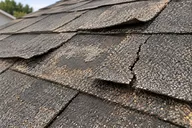 What are the signs you need a new roof?The signs a roof needs replacing, outside and in: age past 20 to 30 years for shingles, bald or curling shingles, repeat leaks, a sagging line. What each means.
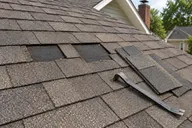 How much does it cost to replace missing shingles?Replacing a few missing or damaged shingles usually costs $150 to $700. A bundle costs $25 to $40. When a patch becomes a section or a new roof.
 How much attic ventilation does a roof need?Code calls for 1 square foot of net free vent area per 150 square feet of attic, split between intake and exhaust. How vents work, warning signs and costs.
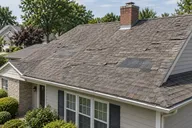 Should you repair or replace your roof?Most roof repairs cost $395 to $1,967; a replacement typically costs $5,900 to $13,400. How age, damage, layers and repair history decide which one you need.
 How long does a roof last?Architectural shingles last about 30 years, 3-tab about 20, metal 40 to 80, slate 60 to 150. What shortens a roof's life, and why a warranty isn't a lifespan.
 What does a roof warranty actually cover?A shingle warranty covers manufacturing defects, a contractor's warranty covers installation. How prorating, wind, algae, transfers and voiding work.
- What is an asphalt shingle roof, and is it right for you?Asphalt shingles are the most common home roof. 3-tab starts near $1.50 a square foot, architectural near $3.50. Life, wind, hail and warranty compared.