
A denial letter ends the insurer's first answer, not your options. Ask for the denial in writing, read which part of your policy it relies on, and call the insurer to explain why you disagree. If you still disagree, the NAIC, the association of state insurance regulators, points you next to your state's department of insurance. If the fight is over how much the repair costs, not whether the policy covers it, your policy may have an appraisal clause. This page covers what to do once the letter has arrived. It is general information, not legal or insurance advice, and the rules differ by state and by policy. Our guide to how a roof insurance claim works covers the steps before that point.
Start with the letter
Get the decision in writing and keep it with every other paper from the claim. The NAIC's post-disaster claims guide says to ask for the denial in writing if the insurer denies any part of the claim, and to keep all paperwork.
Then read what the letter says it is denying. These are different problems, and they lead to different next steps:
| What the letter says | What it means | Where to go next |
|---|---|---|
| The damage is not covered | The insurer reads your policy as not paying for this cause of loss | The insurer, then your state's insurance department |
| Part of the damage is covered, part is not | A partial denial | Ask which items fall on which side, then follow the amount or coverage route |
| The damage is covered, but the amount is lower than your estimate | A dispute about cost, not coverage | Appraisal, if your policy has it |
| The claim came too late | A dispute about notice | Your policy's notice wording and the insurer's reasons |
The NAIC's model claims regulation, a template that regulators in many states have adopted in some form, sets the standard a denial should meet. It says an insurer should not deny a claim on a specific policy provision, condition or exclusion unless the denial refers to that provision, and that the denial must be in writing. It also says that if you object to a rejection, the insurer should tell you in writing that you may have the department of insurance review the matter. A model regulation is not law until a state adopts it, so check what your state's department says. If the letter names no provision, say so when you reply.
The same model says an insurer should not deny a claim for late written notice unless notice within a time limit is a written condition of the policy, or your failure to give notice after being asked was so unreasonable that it breached your duty to cooperate. Again, this is the model's wording, not your state's rule.
Compare the letter with your policy
Find the clause the letter cites and read it in the policy, along with the declarations page and any endorsements. Triple-I, the insurance industry's information group, advises finding out early whether the damage is covered under the terms of your policy, so the clause in the letter is the place to test that.
Look for three things:
- The cause of loss. Policies pay for sudden damage from covered perils, not for age. Our guide to roof insurance claims shows where that line usually falls, and storm damage to a roof explains what wind and hail damage look like.
- Special deductibles and limits. A repair that costs less than your deductible pays nothing, even on an approved claim. Check whether a separate wind or hail deductible applies.
- Payment terms. The roof may be paid at actual cash value, as your roof's age and your policy can decide, which can make a low payment look like a denial. If the claim was approved but the check is short, see our guide to roof claim supplements and depreciation instead.
Contest the facts, not only the decision
Differences in estimates are common, according to the NAIC. In its guide, the insurer and you ideally agree on a "scope of loss", a detailed list of the materials, labor, profit and overhead, code compliance and every item needed to repair the roof. If the insurer's list is shorter than yours, the dispute is often there.
Useful evidence:
- Dated photographs and video of the roof, ceilings and attic, taken before and after the storm if you have both.
- A written estimate from a licensed roofer, with the roof's age, the repair scope and the reason for each item. Our guide to comparing roofing estimates shows how to read one.
- The date and time of the storm and a log of every call and letter with the insurer.
Ask for a second inspection if you have new evidence, and ask who inspected and what they found. How much of the insurer's file you can see depends on state rules, so ask. Do not rely on the roofer's word that a claim "should" be paid. The NAIC notes that an insurer does not have to accept a public adjuster's estimates, so expect to explain a contractor's too.
Appraisal: for disputes about the amount
If you and the insurer agree the damage is covered but not on its cost, your policy may include an appraisal clause. The NAIC says appraisal has two appraisers compare their estimates, that it determines costs only, not whether the policy covers them, and that it is not a court proceeding. Triple-I describes the same process: you and the insurer each hire an appraiser, the two choose a third person (it calls this person a mediator; others call the role an umpire), and agreement by any two of the three is binding. You pay your own appraiser and split the other costs, Triple-I says. The NAIC adds that what you pay depends on your state's law.
If your policy has an appraisal clause, the NAIC says you must go through appraisal before you can sue the insurer. Appraisal does nothing for a coverage denial, so if the letter says the damage is not covered, ask your state's insurance department what else is open.
Arbitration is a different process. The NAIC describes it as a hearing before a neutral person whose decision is usually binding, so you cannot go to court to appeal it. Some policies require it. Read before you agree.
Complain to your state's insurance department
The NAIC says that if you are not satisfied with the insurer's response, contact your state insurance department. Before you sue or enter arbitration, the NAIC's disaster guide says to contact the department for help, and some states may have a mediation process.
The NAIC describes how a complaint works:
- Try to settle the problem with the insurer first.
- Gather the policy number, documents, bills and records, and keep a log of every contact, with dates and times.
- Complete the department's complaint form, which most states take online, by mail or by phone.
- Write a factual timeline without opinions, cite your policy's language where you can, and say what outcome you want.
According to the NAIC, the department checks whether the complaint is within its authority, which is free. It forwards the complaint to the insurer, which has to respond. It decides whether the insurer acted fairly under your policy and can require the insurer to fix an improper action. The NAIC adds that insurers may not retaliate against you for filing. The NAIC lists "unfair claim delays or denials" among the complaints a department can investigate. A complaint is not an appeal, and the NAIC makes no promise about the result.
Watch the deadlines
Deadlines come from your policy and your state, and they are the main way a good dispute is lost. Triple-I says most policies require a claim within one year of the loss. The NAIC says the time to report varies by state. The model regulation also says that an insurer negotiating directly with a claimant who has no lawyer must give written notice of a legal time limit at least 30 days before it expires, but again that is a model, not your state's rule. Do not wait for that notice.
If you are thinking of a lawsuit, ask a lawyer about the time limit in your policy and state. Triple-I says a public adjuster, who works on your claim for a fee, can charge as much as 15 percent of the settlement, and some states set the maximum or bar adjusters from negotiating for you. Check your state's rules and read the contract before you sign.
Protect the roof while you dispute it
A denial does not stop rain. The NAIC's disaster guide says to secure the home to prevent more damage, such as covering holes in a roof with a tarp. Keep the receipts, and see our guide to emergency roof repair for what a temporary fix costs and what it should and should not include.
Be careful with anyone who contacts you offering to fight the denial for free. Our guide to roofing scams and storm chasers lists the red flags. The NAIC says never to pay the full amount before the work is complete, and to report suspected fraud to your agent and your state's department of insurance.
Frequently asked questions
Can I appeal a roof insurance denial?
There is no single national appeal. Start by asking the insurer to reconsider, with your evidence. The NAIC then points you to your state's insurance department. If the dispute is only about the amount, the policy's appraisal clause may help.
Does appraisal work if the insurer says the damage is not covered?
No. The NAIC says appraisal decides the cost of the damage, not whether the policy covers it. For a coverage denial, ask your state's insurance department what routes remain.
How long do I have to dispute a denial?
It depends on your policy and your state. Triple-I says most policies require a claim within one year of the loss. Read the policy for any dispute or suit limit and ask your state's insurance department or a lawyer.
Will a complaint to the insurance department change the decision?
It can lead to review. The department can ask the insurer to explain, and it can require the insurer to fix an action it finds improper. The NAIC gives no promise of a reversal.
Should I hire a public adjuster or a lawyer?
It depends on how big the dispute is and how much the fee would cost. Triple-I says a public adjuster can charge as much as 15 percent of the settlement. Some states limit what they may do. Ask for the contract, and ask your state's insurance department how to check a license.
Where this information comes from
HomeAnvil does not publish claim data of its own. Each fact on this page comes from the source named beside it, read on October 13, 2026. We did not find the text of a standard homeowners policy's appraisal or suit clause in a source we could fetch, so we do not quote it: read the clause in your own policy. This is not legal or insurance advice.
- NAIC, Post-Disaster Claims Guide, dated July 2019: asking for a denial in writing, scope of loss, appraisal, arbitration, what to do after a denial, public adjusters, tarping and contractor fraud tips.
- NAIC, How do I file a complaint against my insurance company?, March 10, 2026, last modified April 27, 2026: the complaint steps and what a department does.
- NAIC, What you should know about settling a homeowners insurance claim, May 22, 2022: calling the insurer and then the state insurance department.
- NAIC, What you need to know when filing a homeowners claim, April 20, 2022: the reporting time varies by state.
- NAIC, Unfair Property/Casualty Claims Settlement Practices Model Regulation (MDL-902), July 1997: sections 5D and 7A on written denials, notice and late-notice denials, section 7D on notice of time limits and section 7H on notice of department review. A model, not law until a state adopts it.
- Triple-I (Insurance Information Institute), Settling insurance claims after a disaster: disagreements, appraisal, public adjusters and the one-year filing rule. The page shows no publication date.
Related guides
 How does a roof insurance claim work after a storm?Insurance usually pays for sudden wind or hail damage, not wear. Wind/hail deductibles often run 1% to 5% of your home's insured value. How a claim works.
 How does your roof's age affect your homeowners insurance?Many insurers inspect or decline roofs over 20 years old, and older roofs are often paid at depreciated value. What to check in your policy and at renewal.
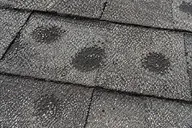 How do you know if hail damaged your roof?Quarter-size (1 inch) hail can start to damage older 3-tab shingles, laminated ones at 1.25 inches. How to spot real damage and when to call your insurer.
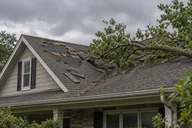 Storm damage to your roof: how to tell and what to doWind damage usually starts at a roof's edges. How to spot lifted, creased and missing shingles and debris damage, and what to do in the first 72 hours.
 How do you spot a roofing scam or a storm chaser?Storm chasers knock unasked, want money up front, offer to cover your deductible or ask you to sign over your claim. How to check a roofer and report one.
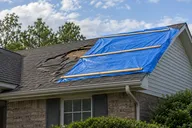 Roofing emergency: what to do and who should tarp itAn open roof or active leak needs a tarp, not a repair. Emergency tarping costs $150 to $3,300, about $450 on average (HomeAdvisor). Safety, receipts, the fix.
- Does home insurance cover roof replacement?Home insurance usually pays for a roof replaced after sudden damage from wind, hail or a falling tree, not for age or wear. What decides whether you get a new roof.
- Should you file a roof claim or pay yourself?If the repair costs about your deductible or less, paying yourself is usually simpler. How to compare the estimate with your deductible, and what filing leaves on record.
- What is a roof claim supplement?A supplement asks your insurer for more money after the first estimate. How recoverable depreciation, hidden damage and the mortgage company on the check work.
- Should you hire a public adjuster for a roof claim?A public adjuster works for you, not the insurer, and is paid a fee, often a percentage of the settlement. When it can make sense, what to check, and the alternatives.