
For most roof claims, you do not need a public adjuster. A public adjuster is a professional you hire, who has no tie to your insurer, to estimate the damage, read your coverage and negotiate the settlement for you. You pay the fee, and it is often a percentage of what the insurer pays. The cost can be worth weighing when the loss is large, the claim is badly stuck, or the paperwork is more than you can handle. For a smaller roof claim with a fair first offer, the fee may take more than the help adds. Triple-I, the insurance industry's information group, says the service can cost as much as 15 percent of the settlement. This page is general information, not legal or insurance advice. Rules differ by state and policy, and we do not recommend any firm.
Three people who "adjust" a roof claim, and one who does not
People mix these up after a storm, and some use the confusion on purpose.
| Who | Works for | Who pays | What they do |
|---|---|---|---|
| Company adjuster | Your insurer | The insurer | Inspects the damage, applies your policy, calculates the settlement |
| Independent adjuster | Insurers, on contract | The insurer | The same job, often sent in when a storm produces many claims |
| Public adjuster | You | You | Estimates the damage, reviews your coverage, negotiates the claim |
| Roofer | You, as a repair contractor | You, or the insurance money you direct | Inspects, writes an estimate, does the repair |
The first three rows come from the NAIC, the association of state insurance regulators, in its Post-Disaster Claims Guide (dated July 2019). A roofer is a contractor: the NAIC defines one as the person who supplies the equipment, materials, labor and services to complete repairs. A roofer can give you a written estimate and photographs, which is useful evidence. A roofer's estimate is evidence, not the insurer's number. For the steps of the claim itself, see how a roof insurance claim works.
When hiring one can make sense
None of the sources we read tell you when to hire. The NAIC's model act says only that you are not required to hire a public adjuster to meet your obligations under the policy, but you have the right to. What follows is our own reading of when the trade-off is worth weighing.
- The loss is large. A claim that covers the whole roof plus interior damage, or more, has more room for disagreement. A percentage fee on a bigger number is also a bigger bill, so do the arithmetic first.
- The claim was denied, in whole or in part. Start with the steps in our guide to a denied roof claim. A public adjuster is one option after those, not instead of them.
- The insurer's number is far below your roofer's. The NAIC says differences between estimates are common, and the work is often a line-by-line argument over the scope of loss. Our guide to roof claim supplements and depreciation covers the part you can often do yourself, with your roofer's documents.
- You cannot spend the time. A claim means documents, calls and deadlines. Some people hire help for that reason alone.
It is less likely to pay off when the damage is small, the insurer's first offer is close to your roofer's estimate, or your deductible takes most of the payment. Sources also point out that the insurer is not bound by a public adjuster's figures: the NAIC says the insurance company does not have to accept a public adjuster's estimates and will typically still send its own adjuster.
What a public adjuster charges
Regulators set the rules, so what is allowed depends on your state.
- The NAIC says that depending on state law, a public adjuster can charge a flat fee or a percentage of the settlement. In some states the maximum is set by law, and the maximum can differ when a widespread catastrophe caused the loss.
- Triple-I says the fee can reach 15 percent of the settlement, and that after a disaster the insurance department sometimes sets the maximum percentage.
- The NAIC's Public Adjuster Licensing Model Act (amended at its 2025 Spring National Meeting) proposes a cap of 10 percent for a catastrophic claim and 15 percent for any other. It also says an adjuster may not demand or accept a fee, retainer or deposit before the claim is settled. A model act is a template. It is law only where a state adopts it, in whole or in part, so check your state's version.
Our own arithmetic shows the stakes. On a settlement of $20,000, a 10 percent fee is $2,000 and a 15 percent fee is $3,000. The question is not what the fee is but whether the adjuster gets you more than the fee. Remember too that the fee comes out of your recovery, and the NAIC says that if you hire after the insurer has made an initial offer, you should ask whether the fee will be based on the total the insurer pays or on the increase the adjuster negotiates. The contract should say.
What to check in the contract
The NAIC's guide says a public adjuster should give you a contract that explains the services and the price. The model act is more specific, and is a good checklist even where your state's law differs. It lists these terms for a written contract:
- The adjuster's name as it appears in the insurance department's records, a business address and phone number, and the license number.
- The title "Public Adjuster Contract", your name and address, your insurer and policy number, a description of the loss and a description of the services.
- Signatures and dates from both of you, and a statement that the adjuster is bonded under state law.
- The full fee. If it is a share of the settlement, the model says the exact percentage must be written in, and expenses to be reimbursed from the payment must be listed by type with dollar estimates.
The model also says what a contract may not contain. It may not let the adjuster collect the percentage when money is due but not paid, or collect the entire fee from the first check instead of a percentage of each check. It may not require that the insurer issue a check only in the adjuster's name, impose collection costs or late fees, or stop you from pursuing civil remedies.
Other points from the model act that you can test against any contract:
- A separate disclosure. Before you sign, the adjuster should give you a separate document that says, among other things, that you are not required to hire a public adjuster, that you may talk directly with your insurer, and that the adjuster is not the insurer's representative.
- A way out. The model gives you the right to cancel in writing within three business days of signing, and to get back anything you gave within fifteen business days of the adjuster receiving your notice. State windows differ.
- No say over your repairs. The model bars an adjuster from having a financial interest in any part of the claim beyond the contract fee, from steering you to repairers who pay the adjuster, and from taking a power of attorney that lets the adjuster choose who does the repairs.
- Your consent to any settlement. The model says an adjuster may not agree to a loss settlement without your knowledge and consent.
Before signing, ask your state's insurance department how to check a license. The NAIC says many states require public adjusters to be licensed. Keep a copy of everything you sign.
Why a storm-chasing roofer who "adjusts" your claim is a red flag
A roofer can help with a claim by supplying an estimate and photographs. A roofer who says he will "be your adjuster", "handle the claim" or "negotiate with the insurer" is a different matter, for three reasons.
- Licensing. The model act says no one may act as, advertise as or solicit work as a public adjuster without a license, and it treats unlicensed adjusting as a fraudulent insurance act. Whether a roofer's claim help crosses that line depends on your state's law. The model says repair contractors may not get around licensing by taking a power of attorney from you.
- Conflict of interest. The model act says an adjuster must serve the client's interest with loyalty, and may not have a financial interest in the claim beyond the contract fee. A roofer paid by the repair has the reverse incentive: the more the claim pays, the larger the job.
- Control of the money. The NAIC warns that an assignment of benefits transfers your rights under the policy and the claim to a third party, most often a contractor, and that you may give up some or all of your rights, including having a lawsuit filed without your knowledge. The FTC says never to sign your insurance check over to a contractor, and not to rely on a contractor to tell you what is covered.
The model act also says an adjuster may not offer to pay your deductible or claim it will be waived, and may not solicit you during the loss-producing event itself. A contractor who offers to "cover your deductible" deserves the same suspicion. Our guide to roofing scams and storm chasers lists more red flags, and checking a contractor before you hire shows how to verify a license and insurance.
Alternatives to try first, or alongside
| Option | Best for | Source of the rule |
|---|---|---|
| Ask the roofer for a written estimate with photographs, and send it to the insurer | A first offer lower than the repair estimate | NAIC post-disaster guide: bring written estimates to the claim |
| A supplement request for newly found or underpriced items | Hidden damage, missing line items, held-back depreciation | See roof claim supplements |
| Ask for a second inspection or a claim manager | New evidence, an adjuster's mistake | Triple-I advises calling your agent or the insurer's claim department manager with figures that support your amount |
| Appraisal clause | Agreement that damage is covered, disagreement on cost | NAIC and Triple-I: each side names an appraiser, and two of three decide the amount |
| Complaint to your state insurance department | Delay, a denial you think is unfair | NAIC: free to file, and the department can require an insurer to correct improper action |
| A lawyer | Coverage disputes, bad faith, legal deadlines | Ask your state bar or insurance department |
Appraisal decides the cost of a covered loss, not whether the policy covers it. Our guide to a denied claim explains how it and the complaint process work. In states where public adjusters may not negotiate for you, the NAIC says only a licensed attorney can represent you, so ask your insurance department what applies.
Frequently asked questions
Do I have to hire a public adjuster for a roof claim?
No. The NAIC's model act says you are not required to, and that you keep the right to talk directly with your insurer. Many homeowners handle a roof claim with their own documents and a roofer's estimate.
How much does a public adjuster cost?
It varies by state. The NAIC says a flat fee or a percentage of the settlement is possible, and Triple-I says as much as 15 percent. Read the contract for the exact figure and for what the percentage applies to.
Is a public adjuster the same as the insurance company's adjuster?
No. The company or independent adjuster works for the insurer, who pays. A public adjuster works for you, and you pay, the NAIC says.
Can my roofer act as my adjuster?
A roofer can supply an estimate and photographs, but whether a contractor may negotiate your claim depends on your state's licensing law. Be careful if a roofer asks for a power of attorney, an assignment of benefits or your insurance check.
How do I check that a public adjuster is licensed?
Ask your state's insurance department. The NAIC says many states require a license, and the model act has the license number written into the contract.
Where this information comes from
HomeAnvil does not publish claim data of its own and does not recommend or rank public adjusters. Every fact here comes from the source named beside it, read on October 13, 2026. The advice on when hiring might make sense is our own reading, flagged as such, and the fee example is our arithmetic. We did not find a current FEMA or flood insurance source that covers public adjuster fees, so we say nothing on flood claims. This is not legal or insurance advice.
- NAIC, Post-Disaster Claims Guide, dated July 2019: the types of adjusters, how a public adjuster is paid, the contract, the insurer's own adjuster, assignment of benefits, and contractor fraud tips.
- NAIC, Public Adjuster Licensing Model Act (MDL-228, adopted 2005, amended at the 2025 Spring National Meeting): the definition, fee limits, contract terms, rescission, bans on conflicts and unlicensed acting, and the repair-contractor language. A model, not law until a state adopts it.
- Triple-I (Insurance Information Institute), Settling insurance claims after a disaster: the 15 percent fee, what to do if you disagree, and appraisal. The page shows no publication date.
- NAIC, How do I file a complaint against my insurance company?, March 10, 2026: what a department does with a complaint.
- FTC Consumer Advice, How to avoid scams after weather emergencies and natural disasters: never signing over an insurance check and not relying on a contractor for coverage answers (page dated September 2025).
Related guides
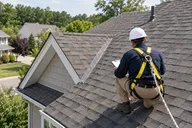 How does a roof insurance claim work after a storm?Insurance usually pays for sudden wind or hail damage, not wear. Wind/hail deductibles often run 1% to 5% of your home's insured value. How a claim works.
- What if your roof insurance claim is denied?A denial is not always final. Ask for it in writing, check the policy clause it cites, use appraisal for amount disputes, and complain to your state's insurance department.
- What is a roof claim supplement?A supplement asks your insurer for more money after the first estimate. How recoverable depreciation, hidden damage and the mortgage company on the check work.
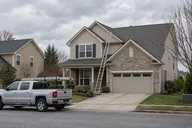 How do you spot a roofing scam or a storm chaser?Storm chasers knock unasked, want money up front, offer to cover your deductible or ask you to sign over your claim. How to check a roofer and report one.
 What to check before you hire a contractorFive things to ask for before you sign with a roofing, siding, window, bath or HVAC contractor, wherever you live in the United States.
- Does home insurance cover roof replacement?Home insurance usually pays for a roof replaced after sudden damage from wind, hail or a falling tree, not for age or wear. What decides whether you get a new roof.