
You need new gutters when the damage is spread along the run rather than in one spot: several cracks or holes, sagging in more than one place, seams that keep opening, rust or peeling paint along the metal, or water that pools or spills even after a cleaning. A single loose hanger or one leaking corner is usually a repair. Home improvement sources put an ordinary repair at about $194 to $643, while a typical gutter lasts about 20 to 25 years, so age is the other thing to weigh. The signs below show which case you are in.
Signs that point to replacement
These are the signs the sources we read agree on. Each is easy to spot from the ground, so you do not need to climb a ladder to check for most of them.
| Sign | Where you see it | What it usually means |
|---|---|---|
| Cracks, holes or split seams | Along the run and at joints | The material is failing; one crack can be sealed, many cannot |
| Sagging or pulling away from the roof edge | A gap between gutter and fascia, bowed runs | Loose fasteners, or a fascia that is soft underneath |
| Rust spots, flaking or peeling paint | On the gutter and the fascia board | Moisture is working through the finish |
| Standing water in the gutter | In sections away from the downspout, a day after rain | The gutter no longer slopes toward the outlet |
| Water running down the wall | Dark streaks, mildew or peeling paint on siding below the gutter | Water is spilling over the edge instead of draining |
| Water at the foundation | Puddles or washed-out soil beside the house | Water is not reaching a working downspout |
| Plants growing in the gutter | Seedlings, moss or weeds | Debris and moisture have sat there a long time |
Modernize, in a guide updated August 12, 2026, lists similar signs of a clogged or failing system, including leaks near the roofline and indoor stains. Today's Homeowner, updated March 31, 2025, says that multiple cracks or large fractures generally mean it is time to replace, and that repainting only hides an underlying problem.
Repair or replace: a simple test
Ask four questions, in this order.
1. How old are they? Today's Homeowner says well-kept gutters generally last around 25 years. HomeAdvisor, updated June 17, 2026, gives about 20 years for galvanized steel or aluminum and about 50 for copper. Our guide to seamless vs sectional gutters compares materials. A gutter near the end of its life will keep failing in new places, so repairs buy less.
2. Is the damage in one place or all along the run? A pro can seal a small crack, replace a hanger, reattach an end cap or swap one section of a sectional gutter. Widespread sagging or repeated fastener failure, Today's Homeowner says, usually calls for full replacement.
3. Does it still drain after a cleaning? Clean gutters first, since a clog can cause most of the symptoms above. If water still pools or spills, the slope or the size may be wrong, and tightening hardware will not fix that. Our guide to why gutters overflow covers the causes.
4. What is behind the gutter? Water that has run behind a gutter can rot the fascia and soffit. Bob Vila, in a guide published September 28, 2026, suggests pressing a screwdriver into the fascia: if it sinks in or feels spongy, the wood is rotted. Then you are paying for wood repair as well as gutters; see soffit and fascia repair cost.
What repair and replacement cost
HomeAdvisor, June 17, 2026, gives these national figures for repair:
| Item | Cost |
|---|---|
| Typical gutter repair | $194 – $643; $400 average |
| Labor | $4 – $30 per linear foot |
| One-story home, average | $170 |
| Two-story home, average | $330 |
| Three stories or more, average | $500 |
HomeAdvisor also warns that damage to a small part of a seamless gutter can force replacement of the whole run, which raises the price. For what a full replacement costs, see how much gutter replacement costs.
We found no source that sets a cost cutoff for choosing repair over replacement, so ask the installer to price both options on the same visit and compare them.
Signs that the problem is not the gutter
Gutters get blamed for things they do not cause, and the reverse also happens.
- Water behind the gutter, or a stain on the ceiling below the roof edge. This can be a roof-edge problem. Bob Vila lists worn drip edge, damaged shingles near the eaves and shingle granules in the gutter as signs the roof itself is failing. If you see many granules, read the signs you need a new roof.
- Sagging after winter. The weight of ice can pull gutters down. Bob Vila lists ice dam weight as one cause. If the gutter was fine until a freeze, fix the ice dam cause too; see what causes ice dams.
- Gutters that look fine but spill. InterNACHI, the home inspectors' association, lists undersized systems spilling over end caps and corners as a defect. More downspouts or bigger gutters may be the fix, not new ones of the same size.
What a pro looks at on a visit
An installer or inspector will usually walk the whole run, so you can expect them to check:
- the slope toward each downspout, by looking for standing water and comparing the gutter edge with the fascia, which is how InterNACHI says inspectors judge it
- joints, end caps and corners for gaps and leaks
- fasteners and the wood they hold
- downspouts for loose brackets, bad connections and where they empty
InterNACHI says downspouts should discharge water 4 to 6 feet from the foundation. A discharge point that fails that test is worth fixing whether or not the gutters are new. See downspout cost and extensions.
If your gutters are failing and your roof is also near replacement, it usually saves money to do both together; our guide to new gutters with a new roof explains why. Before you sign anything, compare at least two written estimates; see questions to ask a gutter installer.
Frequently asked questions
How long do gutters last?
Today's Homeowner says properly kept gutters generally last about 25 years. HomeAdvisor gives about 20 years for galvanized steel or aluminum and about 50 for copper. Weather, installation and upkeep move these numbers.
Can I just repaint rusty gutters?
Paint can hide the rust for a while, but Today's Homeowner says it does not solve the moisture problem underneath, and that extensive moisture damage calls for replacement.
Is a small leak worth fixing?
Usually yes. A small leak at a seam or end cap is a cheap repair, and water that keeps spilling can rot the fascia and stain siding, as Bob Vila and Modernize both warn.
Do I need new gutters if only one section is damaged?
Not necessarily. With sectional gutters one piece can be replaced. With seamless gutters, HomeAdvisor notes a small damaged area may mean replacing the whole run.
Should I add gutter guards to old gutters?
Not until the gutters are sound. Fix or replace damaged gutters first, then decide on guards; see what gutter guards cost.
How we got these numbers
HomeAnvil does not yet publish price data of its own. Every figure and claim on this page comes from a published source, read on October 13, 2026. Cost sites sell or advertise gutter work, so we cite their figures by name and date. This page is general information, not advice on your home; a licensed professional should inspect damage you cannot judge from the ground.
- HomeAdvisor, gutter repair cost, updated June 17, 2026: repair costs, labor, average by home height, lifespan of galvanized steel, aluminum and copper, and the effect of damage on seamless runs.
- Today's Homeowner, signs you need new gutters, updated March 31, 2025: signs, repair or replace guidance and general lifespan.
- Modernize, signs of clogged gutters, updated August 12, 2026: warning signs and what overflow damages.
- Bob Vila, gutter problems, published September 28, 2026: signs of failure, fascia rot test, roof-side damage and causes of overflow.
- InterNACHI, inspecting gutters and downspouts, read October 13, 2026 (the page shows no publication date): defects, how inspectors judge slope, and discharge distance.
We will update this page when these sources publish new figures, and the date above will say when.
Related guides
 How much does gutter replacement cost?New gutters for an average house cost about $2,200 to $5,000, or $4 to $40 a linear foot installed. Costs by material, house size, extras, and repair vs replace.
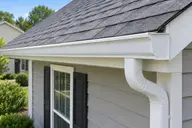 Seamless vs sectional gutters: which should you get?Seamless gutters cost about $6 to $50 a linear foot installed, sectional about $3 to $35. Fewer joints means fewer leaks. Materials, sizes and what to ask.
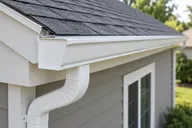 Should you replace gutters with a new roof?Often, if they are old or sagging. New gutters cost about $3 to $45 a linear foot by material, and guards $6 to $45. Sizing, fascia, and when to keep yours.
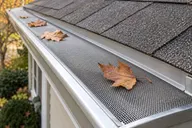 How much do gutter guards cost, and are they worth it?Gutter guards cost about $653 to $2,459 installed, or $6 to $13 a foot; professional systems run $3,000 to $9,000. Types, cleaning costs and payback.
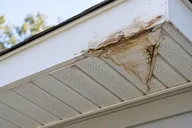 How much does soffit and fascia repair cost?Soffit and fascia repair typically costs $1,050 to $3,300, or $6 to $20 a linear foot. Signs of rot and pests, costs by material, and doing it with a new roof.
 What are the signs you need a new roof?The signs a roof needs replacing, outside and in: age past 20 to 30 years for shingles, bald or curling shingles, repeat leaks, a sagging line. What each means.