
Before you sign with a gutter installer, ask what exactly the estimate covers, not only what it costs. Ask how many feet of gutter are priced, which material and thickness, how the gutters are fastened, how many downspouts there are and where they empty, who deals with rotten fascia, what happens to the old gutters, whether the installer is insured, and what the warranty covers in writing. A low total that leaves out downspouts or removal is not low. Put every answer in the contract. For checks that apply to any contractor, such as licenses and references, see our guide to what to check before you hire a contractor.
The questions at a glance
| Ask | A clear answer includes | Why it matters |
|---|---|---|
| How many linear feet, and at what price per foot? | A measured length and a unit price | Lets you compare estimates on the same basis |
| Which material, thickness and profile? | Material, gauge or thickness, size (5 or 6 inch), K-style or half-round | Two "aluminum" estimates can be different products |
| Seamless or sectional? | Where the run is formed and how many joints there are | Joints are where leaks start; see seamless vs sectional gutters |
| How are the gutters hung? | Hanger type and spacing, in inches | Hangers too far apart let a run sag |
| How many downspouts, and where do they empty? | Count, size, material and how far the water is carried | See downspout cost and extensions |
| What if the fascia is soft? | A price per foot, in writing | Rot shows up only when the old gutters come off |
| What happens to the old gutters? | Removal and disposal, listed | Often a separate charge |
| Are you insured? | A certificate showing liability and workers' compensation | You are exposed if someone is hurt on your property |
| What does the warranty cover? | Material and labor warranties, as separate documents | Terms and lengths vary widely |
| When do I pay? | A deposit that is a fraction of the total, the rest on completion | Paying all up front leaves you nothing to hold back |
Ask about the work, not just the price
Measurement and material. Ask the installer to measure on site and write the footage on the estimate. Then ask for the material and its thickness, the size and the profile. Modernize says to compare materials, since vinyl is the cheapest and copper the most expensive, and to compare sectional against seamless and K-style, half-round or box profiles. Our gutter replacement cost guide gives national prices per foot by material, so you can see whether an estimate is in range.
Hangers. Ask what holds the gutter to the house and how far apart the hangers are. A guide from an installer's blog says that nails loosen as wood expands and contracts, and that hidden hangers screwed into the fascia are spaced about two to three feet apart, closer where snow loads are heavy. That is one company's practice, not a standard, so treat the spacing as a question for each installer, and get the answer in inches.
Slope. Gutters need a slight fall toward the downspout. This Old House (updated April 20, 2026) gives about a quarter inch per 10 feet. Ask how the installer sets it, because standing water in a gutter is a sign it was done wrong.
Downspouts. Ask for the number, size and discharge point of every downspout. This Old House says a gutter run of 60 feet or longer needs at least two outlets. If your old gutters overflowed, ask the installer why the new layout will behave differently.
Fascia and soffit. Gutters hang on the fascia. If it is rotten, it has to be repaired first. Ask for a per-foot price in advance; our soffit and fascia repair cost guide covers the signs and prices.
Guards and roof work. If guards are part of the plan, ask for them as a separate line; see what gutter guards cost. If a new roof is coming, ask whether the gutters go on before or after; see new gutters with a new roof.
What the estimate should list
Modernize (updated August 12, 2026) says an estimate should show material and labor costs, start and finish dates, and any disposal, dumpster or permit charges, and that the breakdown becomes part of the contract once signed. The FTC says a written contract should carry the contractor's name, address, phone and license number, estimated start and completion dates, and any verbal promises about scope or cost. Fill in every blank space before signing.
Ask for three or four estimates, Modernize suggests, and ask why any one is far above or below the rest. Check each for math errors. Modernize says final costs usually land within 10 to 15 percent of an estimate, so ask what could change the figure and get changes in writing.
Insurance and licenses
Ask for proof of insurance before anyone climbs a ladder. Modernize's checklist names personal liability, workers' compensation and property damage, and says to ask for the insurer, policy number and limits when you meet in person. Licensing rules for gutter work vary by state and local government, so ask the installer what applies to the job and check your state's rules.
Warranties
Modernize (updated August 12, 2026) separates two kinds. A materials warranty covers defects such as rust, cracking or fading and typically runs 20 to 50 years depending on material. A labor warranty covers installation faults such as leaks or misaligned gutters and typically runs one to 10 years. Guards carry their own. Ask:
- Who honors each warranty, and what do you do to make a claim?
- Is it transferable if you sell?
- What voids it? Modernize says poor maintenance, accidents and storms are generally not covered, and that not cleaning gutters regularly can void a warranty. HomeAdvisor says a gutter warranty may be valid only if you keep up continuous maintenance.
Get the actual warranty documents, not a description.
Red flags
- A price far below the others. Modernize warns this may mean poor work or a scam. Ask what is missing.
- Pressure to sign today, especially after a storm. The FTC lists pressure to decide immediately as a red flag.
- A large deposit or payment only in cash. The FTC says not to pay the full cost up front, and not to make the final payment until the work is finished and you are satisfied. Some states limit down payments, so check yours.
- A request that you pull the permit. The FTC calls this a warning sign.
- No proof of insurance, no street address or no warranty.
- A vague estimate, with no footage, no materials or no downspout count. Ask for a revised one.
- A contractor who comes to your door or claims to be working nearby; the FTC lists both.
Our guide to roofing scams covers the pressure tactics in more detail; many apply to gutters.
Frequently asked questions
How many estimates should I get?
Three or four, according to Modernize, with the FTC adding that you should not pick the lowest by default. Compare footage, material, downspouts, removal and warranty.
What if the estimate does not say what hangers or thickness it uses?
Ask the installer before you sign and have the answer written into the contract. If two bids differ, compare those lines first.
Can a roofer do my gutters?
Often. HomeAdvisor says roofers may handle gutter work when they are already doing roof work such as soffits or fascia. Ask whether the person installing them does so every day.
Can I cancel after signing?
The FTC says to look for a written notice of your right to cancel within three business days if you signed at home or away from the seller's business. Read your contract and the notice. This is general information, not legal advice.
Where this information comes from
HomeAnvil does not publish contractor data of its own. Each fact comes from the source named beside it, all read on October 13, 2026. Companies are named only as sources.
- Modernize, how to evaluate gutter bids, updated August 12, 2026: contents of an estimate, comparison tips, red flags.
- Modernize, hiring a gutter contractor checklist, updated August 12, 2026: questions and red flags.
- Modernize, guide to gutter warranties, updated August 12, 2026: warranty types, lengths and exclusions.
- FTC Consumer Advice, How to avoid a home improvement scam, July 2022: red flags, written contract, payments, permits.
- This Old House, how to size gutters and downspouts, updated April 20, 2026: slope and outlets.
- HomeAdvisor, gutter repair cost, updated June 17, 2026: roofers doing gutter work, warranty and maintenance.
- A gutter contractor's blog post on what to ask a gutter contractor, read via search summary: hanger and fastening practice. It is a company's marketing page, so we treat it as one view.
Rules on licenses, permits and payments vary by place. We will update this page when these sources change.
Related guides
 How much does gutter replacement cost?New gutters for an average house cost about $2,200 to $5,000, or $4 to $40 a linear foot installed. Costs by material, house size, extras, and repair vs replace.
 What to check before you hire a contractorFive things to ask for before you sign with a roofing, siding, window, bath or HVAC contractor, wherever you live in the United States.
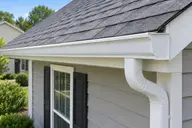 Seamless vs sectional gutters: which should you get?Seamless gutters cost about $6 to $50 a linear foot installed, sectional about $3 to $35. Fewer joints means fewer leaks. Materials, sizes and what to ask.
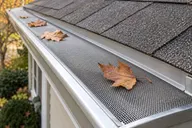 How much do gutter guards cost, and are they worth it?Gutter guards cost about $653 to $2,459 installed, or $6 to $13 a foot; professional systems run $3,000 to $9,000. Types, cleaning costs and payback.
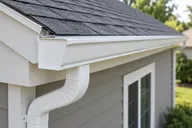 Should you replace gutters with a new roof?Often, if they are old or sagging. New gutters cost about $3 to $45 a linear foot by material, and guards $6 to $45. Sizing, fascia, and when to keep yours.
 How do you spot a roofing scam or a storm chaser?Storm chasers knock unasked, want money up front, offer to cover your deductible or ask you to sign over your claim. How to check a roofer and report one.