
The biggest surprise on a new roof is usually the wood underneath it. Rotted decking is found only after the old roof comes off, and the published range to replace it is $2 to $8 per square foot installed. Permits ($100 to $1,400), a ventilation or code upgrade, and disposal can add more. One cost guide says hidden costs typically add 15% to 20% to the first estimate. You cannot remove the risk, but you can put a price on it in the contract before the work starts, so that a surprise is a known number and not an argument.
What counts as a hidden cost
Some extras are truly unknowable until the roof is open. Others are only hidden because the first estimate left them out. Sort them into two piles when you read an estimate:
- Unknown until tear-off: damaged or rotted decking, damaged rafters or trusses, rotted fascia and soffit, and pests found in the structure.
- Knowable now, but easy to omit: the permit, disposal and the dumpster, ventilation, flashing, drip edge, the extra layers of old roofing, and work around skylights and chimneys.
The second pile is the one you can control before you sign. Ask each roofer to say, line by line, which of these are inside the price and which are not. Our guide to comparing roofing estimates shows how to line them up.
What the extras cost
| Extra | Reported range | Source |
|---|---|---|
| Replacing rotted decking | $2 to $8 per square foot | Fixr, updated February 4, 2026 |
| Structural repairs (decking, rafters, trusses, fascia) | $4,000 to $6,000 | This Old House, updated June 1, 2026 |
| Rafter damage, significant | Up to $5,000 more | Fixr |
| Fascia and soffit repair | $500 to $2,500 | Fixr |
| Permit and inspections | $100 to $1,400 | HomeAdvisor, updated June 17, 2026 |
| Permit, usual range | $100 to $500 | Fixr |
| Ventilation upgrade | $200 to $750 | This Old House |
| Ice and water shield | About $0.50 per square foot | Fixr |
| Removal and disposal of the old roof | $1,500 to $4,500 combined | HomeAdvisor |
| Disposal and debris removal, 2,000 square feet of material | $497 to $583 | This Old House |
| Pest remediation | $100 to $260 | This Old House |
The sources do not agree on every line, and they do not measure the same jobs. Fixr's decking range runs higher than the older $2 to $5 figures in our decking and underlayment guide. Use the table to judge whether a number on your estimate is in a plausible range, not to predict your bill.
Rotted decking
The deck is the wood layer the shingles are nailed to. Water that got past old shingles can soften it, and nobody can see that from the ground. This Old House lists structural repair, including decking, rafters, trusses and fascia, as a hidden cost of $4,000 to $6,000. Fixr prices the deck itself at $2 to $8 per square foot.
A roof of 20 squares is 2,000 square feet. If one sheet in ten is bad, that is about 6 sheets of 32 square feet each, or roughly 190 square feet. At Fixr's range that is $380 to $1,520. That arithmetic is ours, not a published price. A deck that is rotted across most of the roof is a different, much larger bill, which is why the unit price matters more than a guess at the total.
Code upgrades and permits
A permit is an expected fee, but its size varies by place: HomeAdvisor gives $100 to $1,400 and says some areas also require inspections, while Fixr says $100 to $500 is usual. Fixr adds that strict code areas may add thousands of dollars where fire-, impact- or wind-resistant materials are required. Our guide on roof replacement permits covers who pulls the permit and what the inspector checks.
Code changes can also reach the parts of the roof you do not see. Fixr lists an ice barrier at about $0.50 per square foot and a ventilation or insulation upgrade at $100 to $2,000, and This Old House gives $200 to $750 for ventilation. If your roof is short of attic airflow, see roof ventilation. Ask your roofer or your building department what the local code requires, because that, not a general guide, decides.
Layers, disposal and add-ons
More layers of old roofing means more time and more weight to haul; our roof tear-off cost guide goes through it. Fixr gives about $50 per square for tear-off and disposal on average, rising to as much as $150 per square for heavy materials or several asphalt layers. HomeAdvisor puts removal at $1,000 to $3,000 and hauling at $500 to $1,500. This Old House says some contractors expect you to rent the dumpster yourself, so ask who does. If you are tempted to skip the tear-off, read can you put new shingles over old ones first: it saves the removal fee but hides the deck.
HomeAdvisor also lists work that often rides along with a roof, such as skylights at about $1,900 and gutters at about $1,200. Each is a separate decision; ask for it as its own line.
A change order, with an example
A change order is a written change to the original job. The contract should say how one works. We give an example so you can see the shape:
| Item | Allowance in the contract | Found at tear-off | Change order amount |
|---|---|---|---|
| Replace decking, per sheet | $90 | 6 sheets | $540 |
| Rotted fascia board | $14 per foot | 20 feet | $280 |
| Extra layer of old roofing | Not included | One layer | Priced per square in the contract |
These numbers are invented to show the arithmetic and are not a price. What matters is that the per-sheet and per-foot prices were written down before the work. Then a change order is multiplication, not negotiation.
How to cap the surprises in the contract
The Federal Trade Commission's advice on hiring a contractor (page dated July 2022) is to get promises written into the contract and to keep your paperwork, including any changes, in one place. In practice, that means asking for these things:
- Unit prices for the unknowns. Price per sheet of decking, per foot of fascia and per square of an extra layer.
- Changes in writing before the work. Each change states what, why, the price and who signed it. Verbal approvals are hard to prove later.
- A photo of each problem. Ask the roofer to show you the damage before they fix it.
- A named owner for the permit and the dumpster. Say which party pays.
- No full payment up front. The FTC says not to pay the full amount in advance and not to make the final payment until the work is done and you are satisfied.
If the total worries you, ways to save money on a new roof covers the choices. This is general consumer information, not legal advice. For a contract dispute, ask a lawyer or your state's consumer office.
Frequently asked questions
How much should I budget on top of the estimate?
One cost guide, This Old House, suggests a cushion of 15% to 20% of the estimate. That is a planning rule, not a measurement, and a roof with a sound deck may need none of it.
Who pays if the decking is rotten?
You do, unless the contract says otherwise. Damage under the old roof is not the new roofer's mistake. This is why the price per sheet in the contract matters.
Does insurance cover hidden damage?
It depends on the cause. Insurance generally covers sudden damage, not wear or long-term rot. Read your policy and talk to your insurer before work starts.
Can I refuse extra work found at tear-off?
Yes, but a bare deck cannot stay open to the weather, so you will need to decide quickly. Settle the unit prices beforehand so that you can say yes fast.
Are permit fees part of the estimate?
They should be, or listed as a separate line with a named payer. Ask who applies for the permit and who pays.
How we got these numbers
HomeAnvil does not yet publish price data of its own. Every figure comes from a published source read on October 13, 2026:
- Fixr, roof replacement cost, updated February 4, 2026.
- This Old House, hidden costs of roof replacement, last updated June 1, 2026.
- HomeAdvisor, roof replacement cost, updated June 17, 2026.
- Federal Trade Commission, hiring a contractor, dated July 2022.
- The sheet-count example and the change order table are our own arithmetic and invented figures, as stated.
Related guides
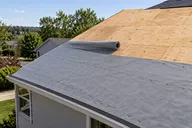 Roof decking and underlayment: what they are and costReplacing roof decking costs $2 to $5 a square foot; a sheet of plywood or OSB runs $9 to $64. How the deck, underlayment and ice barrier work.
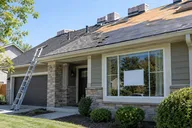 Do you need a permit to replace a roof?Usually yes, where your local code requires one. A roofing permit costs about $100 to $500, and up to $1,400 in some places. Who pulls it and what gets inspected.
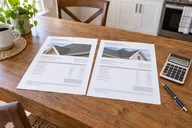 How do you compare roofing estimates?Compare roofing estimates line by line: squares, price per square, product lines, tear-off, decking, underlayment, flashing, permit, warranties and payment terms.
- How much does roof tear-off and disposal cost?Tear-off and disposal usually add $1,500 to $4,500 to a roof job, or about $50 to $150 a square. What layers, dumpster size and recycling do to the line.
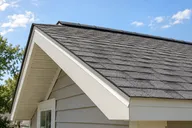 How much attic ventilation does a roof need?Code calls for 1 square foot of net free vent area per 150 square feet of attic, split between intake and exhaust. How vents work, warning signs and costs.
 How much does a roof replacement cost?A roof replacement typically costs $5,900 to $13,400, or $400 to $1,100 per square installed. How to measure your roof, what moves the price and how to compare estimates.
 Can you put new shingles over old ones?Often yes, once: the building code bars a layover on a roof with two or more layers. What a roof-over saves, what it adds in weight, and what it hides.
- How much of a new roof's price is labor?Published sources put labor anywhere from 15% to 65% of a new roof's price, or $150 to $400 a square. Why they disagree and how to read the labor line.
- How can you save money on a new roof?Compare estimates for the same scope, pick a simpler design and material, time the job and skip nothing that protects the deck. Federal home energy credits ended after 2025.
- How do you prepare your home for a roof replacement?Clear the driveway and a 15-foot ring around the house, cover the attic floor, take down wall hangings and plan for pets. A checklist from shingle maker guidance.