
The night before a roof replacement, you need to do five things: move your cars out of the driveway, clear a ring of about 15 feet around the house, cover the floor of the attic, take things off your walls, and decide where the pets and children will be. IKO, a shingle maker, publishes that list in a homeowner guide dated June 4, 2025. None of it is hard, and most of it takes an evening. This guide builds the checklist. For what the crew does on the roof, and how long it takes, see what happens during a roof replacement.
You do not climb onto the roof for any of this, and you should not. Everything below is on the ground or inside the house.
The checklist at a glance
| Where | What to do | Source |
|---|---|---|
| Driveway | Park cars on the street the night before; leave the driveway free for deliveries and the dumpster | IKO |
| Garage | Do not park in it if it is being re-roofed; cover tools and collectibles | IKO |
| Yard | Clear 15 feet around the house; mow; mark sprinkler heads and ponds; cover fragile plants | IKO |
| Attic | Move fragile and sentimental items down; lay tarps or drop sheets on the floor | IKO |
| Walls | Take down mirrors, pictures and loose shelving, mainly on the top floor | IKO |
| Pets and children | Arrange for them to be elsewhere if you can | IKO |
| Access | Unlock gates; check that an outdoor outlet works | IKO |
| Neighbors | Warn the ones next door about noise and stray debris | IKO |
The driveway and the garage
Crews work from the driveway. IKO says a dumpster goes there, and the crew works from the far corner of the roof toward it. Deliveries and equipment use the driveway all day. IKO's advice is to move cars to the street the night before. If you share a driveway, your neighbor should park on the street too.
Do not use the garage as a fallback. IKO warns that a garage roof without insulation under it can let granules and nails fall onto a car and scratch the paint. If the garage is part of the job, cover tools, car parts and other valuables with tarps.
Ask the roofer when the dumpster will arrive and where it will sit. We found no source that gives a standard delivery day, so get it in writing.
The yard and the ring around the house
Old shingles and nails fall off the roof and bounce. IKO advises a clear zone of 15 feet around the house. Inside that ring:
- Move patio furniture, toys and grills into a shed or the garage, or cover them with a tarp.
- Take down gazebo curtains or tie them up.
- Move delicate things such as solar lights, statues, planters, fountains, wind chimes and bird feeders.
- Mark or cover valuable plants with orange tape, netting or a tarp, and tell the crew manager which ones matter most to you.
- Mark sprinkler heads and any pond so no one steps in them.
IKO also suggests cutting the grass. Short grass makes dropped nails easier to see when the crew sweeps up.
Unlock any gates so the crew can reach every side of the house. IKO also suggests checking that an outdoor outlet works for the crew's tools, and if there is none, leaving a nearby door or window open so they can reach power. If shingles may blow into a neighbor's yard, IKO suggests asking the neighbor to unlock the gate so the crew can fetch them. Neighbors with a close boundary may want to cover plants.
The attic
IKO says the attic collects more dust than any other part of the house during a tear-off. It gives two steps:
- Move sentimental and fragile items to the ground floor.
- Lay tarps or painter's drop sheets on the attic floor, over the insulation and anything that has to stay.
The old roof comes off right above the attic, so a covered floor is far easier to clean than an open one. If the replacement follows a leak, tell the roofer where the water showed up.
Ask the roofer whether they will check the attic vents while the roof is open. Our guide to roof ventilation covers what to ask.
The walls and the rooms below
Hammering shakes the whole building. IKO says to take down mirrors, pictures, wreaths and loose shelving, and to be most thorough on the top floor. Keep glass, vases and dishes from touching each other or the walls, because they can walk across a shelf.
IKO also says crews should board up the windows until the old roof is fully off, to prevent scratches. Ask your roofer whether they do that.
Satellite dishes, skylights and solar panels
Anything fixed to the roof has to come off and go back on. IKO says satellite dishes, skylights and solar panels are removed and reinstalled, so expect your television signal to drop. If you have solar panels, see replacing a roof with solar panels before you set a date.
Noise, children and pets
IKO calls a roof replacement "a long, loud job" and says a typical project takes two days, though some finish in one and others take three. In a separate guide dated May 28, 2025, IKO describes tear-off as "quite noisy and disruptive" and installation as quieter, but still busy. It says crews should not work on rainy or snowy days, so the dates can slip.
Pets. IKO's best advice is to board them with a friend or at a kennel. If they must stay home, keep them indoors so they cannot step on a dropped nail. Walk them first and give them a crate and comfort toys.
Children. IKO suggests arranging care with family or friends. If you send them elsewhere, give the roofers your phone number. Tell older children to watch for debris and to wear shoes at all times.
Working from home. IKO suggests staying elsewhere if you can, since the disruption is significant. No source we read gives the hours a crew works in a day. Ask your roofer for the start time and the usual finish time, and tell your neighbors the same.
Neighbors and the paperwork
IKO says warning your direct neighbors about the noise and the chance of debris in their yards tends to make them more cooperative. A short note a few days ahead is enough.
Two things are not on the ground, and both belong before the crew arrives:
- A permit. Whether you need one depends on your local rules. See the roof replacement permit guide.
- A written scope. If you are still comparing roofers, how to compare roofing estimates shows what a complete one names.
The season matters too. A crew cannot work in rain or snow, so a wet or icy stretch pushes the date. Our guide to the best time to replace a roof weighs the seasons.
After the crew leaves
IKO suggests walking around the roof and house with the crew before they leave, then calling them about anything you notice later. It also says to check the driveway and lawn for scuffs, markings and oil drips from equipment, and to report them right away so they can be fixed. IKO's May 2025 guide warns that falling debris can leave nails and other sharp objects in the yard, so keep children and pets inside until the yard has been swept.
Frequently asked questions
Do I have to be home during a roof replacement?
Nothing in the guides we read requires it. IKO suggests staying elsewhere if you can, because of the noise. If you stay, be reachable, since a roofer who finds rotten decking may need your go-ahead.
Do I need to empty my attic?
No. IKO says to move fragile and sentimental items down and to cover the attic floor with tarps or drop sheets. Boxes that stay should be covered.
Where should I park?
On the street, the night before. IKO says the driveway is used all day for deliveries and the dumpster, and it warns against using an under-roof garage, where granules and nails can fall onto a car.
What should I do with my pets?
Board them with a friend or at a kennel, if you can. IKO says that if they stay, they should be indoors, walked beforehand and given a crate and comfort toys, so they do not step on a nail.
Will the noise go on all day?
The crew works through the day, and tear-off is the loudest part. IKO says a typical job takes two days. Ask the roofer for daily hours and a back-up date in case of rain.
Where this information comes from
HomeAnvil does not yet publish data of its own on roofing jobs. Every step above comes from a published source, read on October 13, 2026:
- IKO, How to prepare for a roof replacement, June 4, 2025: the driveway, garage, yard, attic, walls, access, rooftop equipment, pets, children and neighbor steps, and the two-day typical job.
- IKO, What to expect during a roof replacement, May 28, 2025: noise, weather delays, debris and nails in the yard.
Other shingle makers publish their own guidance, and your roofer's instructions come first. This guide is general information, not a contract or professional advice.
Related guides
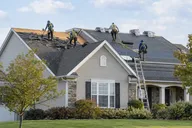 What happens during a roof replacement, step by step?An asphalt shingle roof usually goes on in one to three days. What happens before, during and after, from tear-off and deck repair to flashing and cleanup.
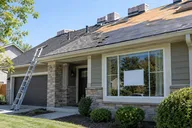 Do you need a permit to replace a roof?Usually yes, where your local code requires one. A roofing permit costs about $100 to $500, and up to $1,400 in some places. Who pulls it and what gets inspected.
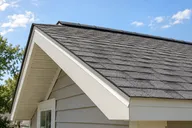 How much attic ventilation does a roof need?Code calls for 1 square foot of net free vent area per 150 square feet of attic, split between intake and exhaust. How vents work, warning signs and costs.
 How do you replace a roof that has solar panels?The panels come off, the roof is replaced, and the panels go back on. Removing and reinstalling them costs about $2,800 to $4,800 by one estimate, more by another.
 How do you compare roofing estimates?Compare roofing estimates line by line: squares, price per square, product lines, tear-off, decking, underlayment, flashing, permit, warranties and payment terms.
 When is the best time to replace a roof?Asphalt shingles seal best in warm, dry weather; below 40°F makers call for hand-sealing. How weather, contractor demand and storm season shape your timing.
- How much does roof tear-off and disposal cost?Tear-off and disposal usually add $1,500 to $4,500 to a roof job, or about $50 to $150 a square. What layers, dumpster size and recycling do to the line.
- How much of a new roof's price is labor?Published sources put labor anywhere from 15% to 65% of a new roof's price, or $150 to $400 a square. Why they disagree and how to read the labor line.
- What hidden costs come with a new roof?Rotted decking at $2 to $8 a square foot, permits of $100 to $1,400, code upgrades and disposal can add 15% to 20% to a roof estimate. How to cap them in writing.
- How can you save money on a new roof?Compare estimates for the same scope, pick a simpler design and material, time the job and skip nothing that protects the deck. Federal home energy credits ended after 2025.