
A shingle roof needs a look twice a year and after any severe storm, plus a professional visit at least once a year. That is the schedule the National Roofing Contractors Association (NRCA) gives for roofs in general, and CertainTeed, a shingle maker, asks for the same professional cadence. You do the looking from the ground. A roofer does anything that means climbing, and an inspection averages about $230, according to Fixr's August 2024 figure. This guide gives you the schedule, what to watch for, what a pro covers and what it costs.
The schedule at a glance
| When | What happens | Who |
|---|---|---|
| Spring | Look for winter damage; clear gutters and downspouts | You, from the ground; a roofer if something looks wrong |
| Summer | Check attic heat and ventilation; watch for moss and algae; trim branches | You, and a tree service if limbs are large |
| Fall | Clear leaves from roof edges and gutters; look at flashing and sealant around vents and chimneys | You, from the ground; a roofer for repairs |
| Winter | Watch for ice dams; keep off an icy roof | You, from the ground |
| After a severe storm | Look at the roof and the attic ceiling; call a roofer if you see damage | You first, then a professional |
| Once a year, at least | A professional inspection | A roofer |
The first column follows IKO's seasonal guide of June 25, 2025. The twice-a-year and after-storm timing is NRCA's, from a 2013 article by its technical staff.
What NRCA and the manufacturers say
NRCA says roof systems should be inspected at least twice a year, preferably in spring and fall, with extra inspections after severe weather such as a hurricane, tornado or hailstorm. An inspection is a thorough visual check of the roof and the surfaces next to it, such as sidewalls and chimneys. On an asphalt shingle roof, NRCA names curling or splitting as evidence of deterioration, and says loose or missing tabs should be repaired.
CertainTeed says to inspect before and after storms, and to schedule a professional inspection at least once a year, ideally twice, before the severe-weather season and after major storms. It adds that repair after a storm may be covered by homeowners insurance. For how a claim works, see roof insurance claims.
The two sources differ on one thing. NRCA says homeowners can often check steep-slope roofs from the ground or a ladder at the edge. CertainTeed says to use binoculars from the ground. Both say do not walk on the roof. NRCA says homeowners and inexperienced staff should not walk on roofs unless they have the experience and the safety equipment.
What to look for from the ground
You do not need to be on the roof to learn a lot about it. From the yard, with binoculars if you have them, look for:
- Missing, loose or damaged shingles.
- Sagging in a valley, or gutters that have pulled away or sag.
- Debris piled in valleys and at the gutters.
- Dark streaks or moss. Our guide to moss and algae on roofs explains which are harmless and which are not.
- Gaps in the caulk and rust on flashing, the metal at chimneys, vents and walls.
That list follows IKO's.
What to check in the attic
CertainTeed adds a check inside the house. After wet weather, look in the attic for water stains on the rafters or decking, wet insulation and mold. A stain is a reason to call a roofer. Our guide to signs you need a new roof covers which signs mean a repair and which mean a replacement.
Keeping the roof and gutters clear
CertainTeed says debris can clog gutters, trap moisture, attract pests and cause algae streaking. IKO says to clean gutters and downspouts in spring and to clear leaves and twigs from the roof and gutters in fall, more often if you have many trees. NRCA says to remove debris, paying close attention to valleys, gutters and roof drains where it collects.
NRCA says to hire an experienced contractor promptly for repairs, and IKO puts cleaning moss-covered shingles on its list of work for a licensed roofer.
Trees. IKO says to trim branches that could drop debris or rub the shingles. CertainTeed says to have a professional tree service take down limbs that are a hazard. Do not take a chainsaw to a limb over the roof yourself.
Cleaning: what not to do
CertainTeed says to have a professional clean algae or moss off asphalt shingles with a cleaning agent and a soft brush, and says plainly not to use a power washer. High-pressure spray can strip the granules that protect the shingles. Our moss and algae guide has the manufacturer bulletin and the costs.
Winter
IKO says to watch for ice dams along the eaves and to check that attic insulation is sufficient to limit heat loss. It also says to remove snow with a roof rake from the ground, and never to climb onto an icy or snowy roof. For what an ice dam is and how it is dealt with, see ice dams.
What a professional visit covers
CertainTeed and IKO list work they say a licensed roofer should do, because it means climbing on the roof:
- Replacing broken, buckled or missing shingles.
- Repairing flashing around chimneys and vents.
- Sealing penetrations.
- Fixing storm, tree or age damage to the structure.
- Treating mold or rot on the shingles or the deck.
- Cleaning moss-covered or discolored shingles.
- Replacing damaged gutters.
For what an inspection itself includes, how drone and infrared options differ, see how much a roof inspection costs.
What it costs
Cost figures we could verify are few, and they mix different jobs.
| Item | Figure | Source |
|---|---|---|
| Professional roof inspection | $230 average | Fixr, August 26, 2024 |
| Professional roof cleaning, 1,500 square foot roof | $300 to $1,050, average $675 | This Old House, March 31, 2026 |
| Minor repairs | See the repair cost guide |
The Fixr figure is a single average with no range. For repairs, the price depends on what is found, so see roof repair costs. We found no source we could verify for the price of a yearly maintenance plan, so we do not give one. If a roofer offers a plan, ask what visits, cleaning and repairs it includes and whether it names a fee for each.
Maintenance does not guarantee how long a roof lasts. Age, material, weather and the quality of the install matter more. For lifespans by material, see how long a roof lasts.
When to call a roofer now
Do not wait for the next season if you see these signs, which come from the CertainTeed and IKO lists above:
- Water stains on attic rafters or decking, wet insulation or mold.
- Missing, loose or damaged shingles after a storm.
- Flashing that has pulled away or rusted.
For storm damage in particular, what to do after storm damage lists the steps in order.
Frequently asked questions
How often should you inspect a shingle roof?
NRCA says at least twice a year, preferably spring and fall, and again after severe weather. CertainTeed says a professional should look at least once a year, ideally twice.
Can I inspect my own roof?
From the ground, yes. NRCA says homeowners can often check from the ground or a ladder at the edge, and also says not to walk on the roof without experience and safety gear. CertainTeed says do not walk on it.
Can I pressure wash my roof?
No. CertainTeed says not to use a power washer on asphalt shingles, because the spray can strip the granules.
Do I need to clean the gutters?
Yes. IKO says to clean them in spring, and in fall clear leaves from the roof and gutters. Clogged gutters hold moisture, CertainTeed says.
What does a roof inspection cost?
Fixr gives an average of $230. Prices vary by roof. See the inspection cost guide for ranges by type.
Where this information comes from
HomeAnvil does not yet publish data of its own on roofing jobs. Every claim above comes from a published source, read on October 13, 2026. This is general information, not insurance or warranty advice; read your own warranty and policy.
- NRCA, Mark S. Graham, Routine preventative maintenance is necessary for optimal residential roof system performance, Professional Roofing, October 2013: inspection frequency, after-storm inspections, what to look for, who should work on a roof. The article is older, and NRCA's current guidance may differ.
- CertainTeed, What type of maintenance does my roof require?, page undated, copyright 2025: ground inspection, attic check, professional visits, power washing, tree limbs.
- IKO, Seasonal roof maintenance tips for homeowners, June 25, 2025: seasonal tasks, ground-level checks, work for a roofer, ice dams.
- Fixr, Home maintenance cost guide, August 26, 2024: the $230 average for roof inspection and maintenance.
- This Old House, Roof cleaning cost, updated March 31, 2026: the cleaning range and average. The page lists $675 in one place and $600 in a table for the same size roof.
Related guides
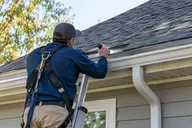 How much does a roof inspection cost?A roof inspection typically costs $125 to $383, about $252 on average. Drone inspections run $150 to $400 and infrared $400 to $600. What each one checks.
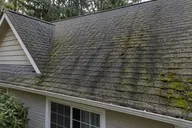 Are black streaks and moss bad for your roof?Black roof streaks are algae and mostly cosmetic; moss can lift shingles. Never pressure wash. Pro cleaning costs about $300 to $1,050 for a typical roof.
 How long does a roof last?Architectural shingles last about 30 years, 3-tab about 20, metal 40 to 80, slate 60 to 150. What shortens a roof's life, and why a warranty isn't a lifespan.
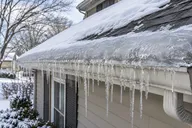 What causes ice dams, and how do you stop them?Ice dams form when attic heat melts roof snow that refreezes at the eaves. How to remove one safely, what not to do, and how to stop them coming back.
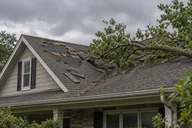 Storm damage to your roof: how to tell and what to doWind damage usually starts at a roof's edges. How to spot lifted, creased and missing shingles and debris damage, and what to do in the first 72 hours.
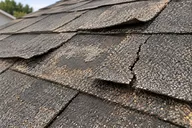 What are the signs you need a new roof?The signs a roof needs replacing, outside and in: age past 20 to 30 years for shingles, bald or curling shingles, repeat leaks, a sagging line. What each means.
- Is a free roof inspection really free?A free roof inspection costs nothing up front, but it is a sales visit. What an honest one covers, how storm chasers use it, and how many estimates to collect.
- What do roofer certifications actually mean?A roofer's manufacturer certification unlocks enhanced warranties. It does not prove a license, insurance or good work. What programs require and how to verify one.