
Yes, in most cases a free roof inspection costs you nothing at the door, and so does a free roof estimate. But neither one is a favor. The roofer is hoping to win the job, so you should treat what you hear as one opinion from someone with something to sell. An honest free visit gives you a written estimate and photos of any problem, with no pressure to sign that day. A bad one ends with a scare, a discount that expires tonight and a request for money. Get the findings in writing, then check them against a second roofer or a paid inspector.
This guide covers what a free inspection should include, the storm-chaser version, and how many estimates are enough. It is general information, not legal, insurance or financial advice.
Free inspection and free estimate are different things
People use the two words as if they meant the same thing. They do not.
- An inspection answers "what is wrong with my roof?" A roofer goes over the surface, the flashing, the vents and, ideally, the attic, and tells you what they found.
- An estimate answers "what will it cost to fix?" It is a written price for a defined scope of work.
A free visit often does both at once, which is the convenient part and the risk. If the same person finds the problem and sells you the fix, nobody checks the diagnosis. Our guide to what a roof inspection costs covers paid inspections, which are the independent version because the inspector is not bidding on the work.
What an honest free inspection includes
Fixr, a home-cost site, says companies may advertise a free inspection and that you should always ask what it includes. Its January 31, 2025 cost page lists what a trustworthy contractor typically checks:
| Area | What the roofer looks at |
|---|---|
| Roof covering | Shingle condition, missing or lifted pieces, wear |
| Deck and attic | Framing, leaks, water stains, mold or moisture |
| Edges | Gutters, downspouts, fascia and soffit |
| Penetrations | Skylights, chimneys and vents |
| Flashing | The metal at joints and around penetrations |
| Ventilation | Attic airflow |
Fixr adds that an attic inspection should be included, though some companies charge extra for one. The same page puts a paid inspection at about $426 nationally, with a typical range of $307 to $571. That is a useful yardstick for what an inspector's time is worth, and a reason to ask what the free version leaves out.
Before the visit, ask these things:
- Will you go in the attic, or only look from the ground and the roof surface?
- Will I get a written report with dated photos of every problem you find?
- Is there a follow-up sales visit, and is it required?
- Do you have experience with my roof material?
If you need a certified roof report for a home sale, a refinance or an insurance change, say so beforehand. Fixr advises telling the inspector beforehand. If a roofer waves a manufacturer badge during the visit, our guide to what roofer certifications mean explains what it does and does not prove. Our list of questions to ask a roofer has more to ask once the estimate arrives.
Free is a sales method
Fixr warns that some contractors use a free inspection to lure you in and then upsell work a proper inspection would have covered anyway. The warning signs are easy to spot once you know them:
- The roofer says the roof needs full replacement but cannot show you the damage in a photo.
- The price is good only if you sign today.
- You are asked to sign a contract before you have a written estimate.
- The roofer will not leave a written report.
A free visit that finds a real, photographed problem and a written price is doing its job. One that finds only urgency is selling.
The storm-chaser version
After a hailstorm or a windstorm, people knock on doors offering a free look at your roof. Sometimes these are local roofers. Often they are not. Triple-I, the insurance industry's information group, warns you to be especially wary of people who go door to door soliciting business after a catastrophe, and not to let anyone pressure you into a contract. The FTC lists these warning signs after a weather disaster:
- Scammers claim they do not need a license.
- A discount requires you to sign right away.
- The contractor asks you to sign over your insurance check.
- The contractor asks for full payment up front, or for cash, a wire, a gift card, a payment app or cryptocurrency.
- You are asked to sign a blank contract.
The FTC also says not to rely on a contractor to tell you what your insurance covers. Call your insurer yourself. Triple-I notes that your insurer's adjuster is available at no charge, and you can hire a third-party professional as well. A contractor's free inspection does not replace the adjuster's, and it does not start a claim for you. Our guide to roofing scams and storm chasers goes through the full list, and our guide to storm damage to a roof shows what real damage looks like, so you can judge a photo for yourself.
What to do on the day a roofer shows up
- Do not sign anything at the door. The FTC says to be skeptical of anyone promising immediate cleanup or repairs.
- Ask for the license and proof of insurance. The FTC advises confirming a license with your state or county and treating a refusal to show insurance or a written contract as a red flag. Our guide on what to check before you hire a contractor lists what to ask for.
- Search the company name with words like "scam," "review" and "complaint," as the FTC suggests.
- Take the written findings and walk away. You can decide later.
- Know your cancellation right. The FTC's Cooling-Off Rule gives you until midnight of the third business day to cancel certain sales made in your home. It does not cover sales made because you asked for a repair visit, or purchases needed in an emergency. If you invited the roofer, you may have no federal cancellation right, so do not rely on it.
How many estimates should you get?
More than one. HUD says to get more than one estimate and notes that the cheapest is not always the best fit. The FTC says to get estimates from more than one contractor, and says a written estimate should describe the work and materials and give a completion date, the price and contact details. Neither agency sets a number, and neither do the NRCA or the BBB pages we read. Many people aim for three, but none of the sources we read require that.
What matters more than the count is that each estimate prices the same job. The FTC also says not to pick the lowest bid automatically, and to ask for an explanation when prices differ widely. NRCA, the roofing contractors' trade association, tells homeowners to insist on a written proposal with a full description of the work, and to be skeptical of the lowest bid. A free estimate that is one line long cannot be compared with anything. Our guide to comparing roofing estimates shows how to line them up item by item.
A practical plan for most homeowners:
- If you have a leak or visible damage, get a free look from one or two local roofers.
- For a large job, get a written estimate from each.
- Pay for an independent inspection if the findings do not match, or if the recommendation is a full replacement.
- Check each company before you sign.
Frequently asked questions
Is a free roof inspection a scam?
No, not by itself. Many established roofers offer them as a way to win work. It becomes a problem when the visit relies on pressure, a deadline or a request for money. The FTC and Triple-I both warn about unsolicited contractors after storms.
Does a free inspection start an insurance claim?
No. A contractor cannot file or decide your claim. Your insurer's adjuster does that. Call your insurer yourself before you sign anything, and do not sign over an insurance check. The FTC says to ask your bank or credit union for a Certificate of Completion instead, so the bank pays the contractor in stages after you approve the work.
Should I be on the roof during the inspection?
You do not need to be on it, and you should not climb up. Ask for dated photos of every problem instead. If a roofer cannot photograph what they claim to see, ask another roofer to look.
Can I trust the findings of a free inspection?
Treat them as one opinion. A written report with photos is worth keeping. For a major decision, such as a full replacement, compare it with a second roofer or a paid inspector who is not bidding on the work.
Is a free estimate binding?
Not usually. An estimate is a price for a stated scope, and the contract is what binds both sides. Read the contract, and make sure it has no blank spaces and includes start and finish dates and a payment schedule, as the FTC advises.
Where this information comes from
HomeAnvil does not publish price or fraud data of its own. Each fact on this page comes from the source named beside it, all read on October 13, 2026:
- Fixr, Roof inspection cost, updated January 31, 2025: what a free inspection includes, the upsell warning, the questions to ask, and the $426 average with a $307 to $571 typical range.
- FTC Consumer Advice, How to avoid scams after weather emergencies and natural disasters, September 2025: warning signs, licenses, insurance, payment, contract contents, estimates and the Certificate of Completion.
- FTC Consumer Advice, How to avoid a home improvement scam, July 2022: multiple written estimates, not choosing the lowest bid automatically, and checking complaints.
- FTC Consumer Advice, Buyer's remorse: the FTC's Cooling-Off Rule may help, September 2025: the three-business-day right and its exclusions.
- Triple-I, Avoiding scams after a disaster, no date shown: door-to-door solicitors, not being rushed, written estimates and the insurer's adjuster.
- HUD, Fixing up your home and how to finance it, no date shown: get more than one estimate.
- NRCA, Selecting a contractor: written proposals and skepticism about the lowest bid.
- BBB, BBB tip: hiring a roofer, last updated May 28, 2025: it sets no number of estimates.
Laws on contractor licensing, deposits and cancellation differ by state, so check your own state's rules. We will update this page when these sources change.
Related guides
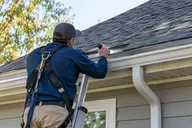 How much does a roof inspection cost?A roof inspection typically costs $125 to $383, about $252 on average. Drone inspections run $150 to $400 and infrared $400 to $600. What each one checks.
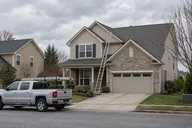 How do you spot a roofing scam or a storm chaser?Storm chasers knock unasked, want money up front, offer to cover your deductible or ask you to sign over your claim. How to check a roofer and report one.
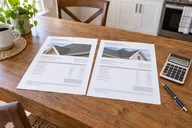 How do you compare roofing estimates?Compare roofing estimates line by line: squares, price per square, product lines, tear-off, decking, underlayment, flashing, permit, warranties and payment terms.
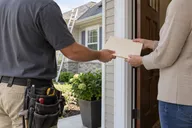 What to check before you hire a contractorFive things to ask for before you sign with a roofing, siding, window, bath or HVAC contractor, wherever you live in the United States.
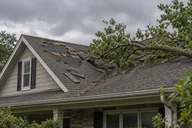 Storm damage to your roof: how to tell and what to doWind damage usually starts at a roof's edges. How to spot lifted, creased and missing shingles and debris damage, and what to do in the first 72 hours.
 What questions should you ask a roofer before you sign?The roofing questions to ask before you sign: tear-off, decking, ice barrier, ventilation, permit, crew, cleanup, payment and warranty papers, plus red flags.
- What do roofer certifications actually mean?A roofer's manufacturer certification unlocks enhanced warranties. It does not prove a license, insurance or good work. What programs require and how to verify one.
- What maintenance does a shingle roof need?Look at your roof from the ground each spring and fall and after storms, keep it and the gutters clear, and book a pro to inspect it. Inspections cost about $230.