
Hire a roofer in this order: find several candidates, check each one's license and insurance, get written estimates that cover the same job, call references, sign a contract that spells out the work, pay in stages tied to finished work, and inspect the job before the last payment. The FTC and the National Roofing Contractors Association (NRCA) both give advice in this shape. Each step below says what to do and sends you to the guide that goes deeper, so you can work through them one at a time.
This page is the order of the steps. It does not repeat the long lists that live elsewhere. It is general information, not legal advice.
The seven steps at a glance
| Step | What you are doing | Where to go deeper |
|---|---|---|
| 1. Find candidates | Build a short list from people you trust and from your own research | This page |
| 2. Check the company | License where required, insurance certificates, a real business address | What to check before you hire a contractor |
| 3. Get estimates | Written, itemized, for the same job | How to compare roofing estimates |
| 4. Ask questions | The job itself: tear-off, decking, ventilation, crew | Questions to ask a roofer |
| 5. Sign a full contract | Everything promised, in writing | What a roofing contract should include |
| 6. Pay in stages | Never the whole price up front | Roofing scams |
| 7. Inspect and close out | Walk the job, collect the paperwork, then make the last payment | Roofing warranties |
Step 1: Find candidates
The FTC suggests asking people you know and trust for recommendations, then checking each name with your local consumer protection office and Home Builders Association for complaints. It also suggests searching the company's name alongside words such as "scam," "review" and "complaint," and reading online reviews with a critical eye.
NRCA adds that a reliable roofer has a fixed business location and a phone number you can call back. Membership in a roofing association is another point in a company's favor, in NRCA's view, though it is not proof of good work on its own.
Be careful with a roofer who knocks on your door. Some are honest, but door-to-door pitches after a storm are where many scams start. Our guide to roofing scams lists the warning signs.
Step 2: Check the company
Two checks come before any price talk.
License. Contractor licensing is set by each state, and some states and local governments require one for roofing while others do not. Look up the company with your state's contractor licensing board, or ask your local building department who regulates roofers where you live. The FTC advises confirming the contractor is licensed and insured with your state or county, and asking for proof of insurance.
Insurance. NRCA says to get copies of the contractor's liability insurance and workers' compensation certificates, and to confirm they stay in force for the whole job. The Better Business Bureau (BBB) lists workers' compensation, property damage and personal liability as the coverages to verify. The Insurance Information Institute (Triple-I) explains the reason in a related setting: a certificate of insurance is the written proof that a business carries workers' compensation for its employees, and an uninsured accident on your property can be your financial problem. Read the dates on the certificate, and ask the contractor's insurance agent to confirm it if anything looks off.
The short version of the rest of this check, with the questions to ask a contractor about references and paperwork, is in what to check before you hire a contractor.
Step 3: Get written estimates for the same job
The FTC advises getting more than one written estimate that describes the work, the materials, the completion date and the price, and not picking the lowest automatically. It suggests asking about large differences between estimates. NRCA agrees that price is one criterion among several and warns against a bid that seems too good to be true.
A difference of thousands of dollars usually means the estimates are not pricing the same job. One may leave out tear-off, decking, flashing or ventilation. Put the estimates side by side by the square and line by line. Our guide to comparing roofing estimates shows how, with a worksheet.
Step 4: Ask about the work and call references
With estimates in hand, ask each roofer how they would do your job. Who will be on the roof, and who supervises? Who pulls the permit? How will they handle rain while the roof is open? NRCA suggests asking for the name of the person who will oversee the project and how the company checks quality. The questions to ask a roofer guide holds the full list, grouped by topic.
Ask for a list of completed projects and for references, then call them. NRCA recommends contacting past clients about their satisfaction. Ask for jobs like yours, recent ones, and ask the reference whether the crew finished on time, cleaned up and fixed problems afterward.
Step 5: Sign a contract that holds everything
The FTC advises asking for a written contract even where your state does not require one. It should carry the contractor's name, address, phone number and license number, the start and completion dates, and every verbal promise about the work and the cost. If you sign at home, it should also include a written statement of your right to cancel within three business days. Fill in or strike every blank before you sign.
NRCA adds roofing details: the roof covering by manufacturer and color, the removal of the old roof, flashing, ventilation, the installation method, the warranty, and who is responsible for damage caused by the work. Our checklist, what a roofing contract should include, goes line by line.
If you sign away from the seller's place of business, the FTC's Cooling-Off Rule generally gives you until midnight of the third business day to cancel for a full refund on a sale of $25 or more. The rule excludes emergency purchases. If you are tempted to sign on the spot because a storm just hit, read that exclusion before you assume the right applies.
Step 6: Pay in stages
The FTC advises never paying the full cost up front, and notes that some states limit how large a down payment can be. Check the rule with your state or local consumer agency. Ask for a schedule that ties each payment to a stage of finished work, and keep a receipt or invoice for every payment.
Unpaid suppliers and subcontractors can sometimes place a lien on your home even after you have paid the roofer in full. That is a state-law question, so ask for lien waivers as you pay and read our guide to roofing lien waivers. For how much to pay and when, see how much deposit a roofer should ask for.
Step 7: Inspect, collect the paperwork, then make the last payment
The FTC says never to make the final payment until the work is finished and you are satisfied. Before you do:
- Walk the property with the roofer and look at the roof from the ground. Do not climb up yourself.
- Check that old materials are gone and the site is clean. The BBB advises confirming before the job starts that the roofer will haul away the debris and whether that carries an extra charge.
- Ask for the manufacturer's warranty certificate and the contractor's workmanship warranty in writing. NRCA says to get the manufacturer's certificate after the project is complete, and that a workmanship warranty should say what it covers and what voids it. Our guide to roofing warranties explains how to read them.
- If the job needed a permit, ask when the final inspection will happen and get proof that it passed.
- If something is wrong, say so in writing. Our guide to signs of a bad roofing job shows what to look for.
Frequently asked questions
How many roofers should I get estimates from?
There is no fixed number. The FTC says to get more than one written estimate. What matters most is that each one prices the same job, so you can compare them fairly.
Should I hire the cheapest roofer?
Not on price alone. The FTC says not to pick the lowest bid automatically and to ask about large differences, and NRCA calls price one criterion among several. A low total often leaves out work that you will pay for later.
Is a roofing license required?
It depends on where you live. Licensing is set by states and sometimes by local governments, so ask your state's licensing board or your building department what applies to roofing. If a license is required, the FTC advises checking it and asking for proof of insurance.
Can I cancel after I sign a roofing contract?
Sometimes. If you signed at home or somewhere other than the seller's permanent place of business, the FTC's Cooling-Off Rule generally lets you cancel for a full refund until midnight of the third business day. It does not cover emergency purchases, and some states give extra protection. Read your contract and cancel in writing.
What should I do if the roofer does not finish or the work is poor?
The FTC advises trying to settle it with the contractor first, following up phone calls with a letter sent by certified mail with a return receipt, and keeping notes and copies. If that fails, contact your state attorney general or local consumer protection office.
Where this information comes from
HomeAnvil does not publish contractor data of its own. Each fact on this page comes from the source named beside it, all read on October 13, 2026. This is not legal, insurance or financial advice.
- FTC Consumer Advice, How to avoid a home improvement scam, July 2022: checking license and insurance, recommendations and complaints, written estimates, contract contents, down payments, the final payment and reporting a problem.
- FTC Consumer Advice, Buyer's remorse: the FTC's Cooling-Off Rule may help, September 2025: the three-business-day right to cancel, the $25 threshold, covered places and the emergency exclusion.
- NRCA, Selecting a contractor, no date shown (page copyright 2026): business location, insurance certificates, references, written proposal, supervision and price as one criterion.
- NRCA, Resources for consumers, no date shown (page copyright 2026): what a proposal should include, who is responsible for damage, and the two kinds of warranty.
- Better Business Bureau, Hire a trusted roofing contractor, published August 15, 2023, updated May 28, 2025: coverages to verify, cleanup and weather protection.
- Triple-I, Do I need to insure my household help?, no date shown (page copyright 2026): a certificate of insurance as documentation of workers' compensation. It concerns hiring through a firm; we use it only for what a certificate shows.
- FindLaw, Understanding mechanic's liens, updated December 28, 2023: liens by unpaid subcontractors and suppliers, and lien waivers.
Licensing, deposit limits, liens and cancellation rules differ from state to state. We will update this page when these sources change, and the date above will say when.
Related guides
 What questions should you ask a roofer before you sign?The roofing questions to ask before you sign: tear-off, decking, ice barrier, ventilation, permit, crew, cleanup, payment and warranty papers, plus red flags.
 What to check before you hire a contractorFive things to ask for before you sign with a roofing, siding, window, bath or HVAC contractor, wherever you live in the United States.
 How do you compare roofing estimates?Compare roofing estimates line by line: squares, price per square, product lines, tear-off, decking, underlayment, flashing, permit, warranties and payment terms.
 How do you spot a roofing scam or a storm chaser?Storm chasers knock unasked, want money up front, offer to cover your deductible or ask you to sign over your claim. How to check a roofer and report one.
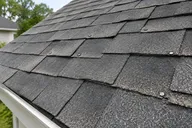 Signs of a bad roofing job, and what to do about itWavy shingle rows, high or exposed nails, missing flashing or drip edge and first-year blisters point to poor work. How to document it and use your warranty.
 What does a roof warranty actually cover?A shingle warranty covers manufacturing defects, a contractor's warranty covers installation. How prorating, wind, algae, transfers and voiding work.
- How do you file a roof warranty claim?Report a shingle defect within 30 days, send proof of purchase and ownership, and leave the roof alone until the maker decides. Workmanship claims go to your roofer.
- How much deposit should a roofer ask for?Roofers' own guides put a deposit at 10% to 33% of the price; some states cap it far lower. A stage-payment schedule, final payment rules and how to pay.
- What if your roofer stops work or closes?Document the job, put your demand in writing, dispute a card deposit within 60 days of the statement, and check who is unpaid. What happens to the warranty.
- What should a roofing contract include?A roofing contract should name the work line by line, the dates, payments, who pays for damage, the warranties and your right to cancel. A checklist, not a template.
- Do you need a lien waiver when you pay a roofer?Paying your roofer in full may not end the matter: unpaid suppliers can lien your home. What a lien waiver is, conditional vs unconditional, and what to collect.