
Yes. A roof sheds a lot of water, and the gutters and downspouts exist to carry it away from the house. When they overflow, leak or empty right beside the wall, that water soaks the soil at the foundation. Home inspectors treat a downspout that discharges next to the foundation as a defect. The damage is usually slow: eroded soil, damp basements, cracks, rot and mold. The fix is usually cheap if you catch it early, and costly if you wait. Foundation repair averages about $5,174, according to HomeAdvisor (updated June 20, 2026), while a downspout extension is a small purchase.
This page explains how roof water reaches the foundation, what to look for, what distances sources recommend, and when gutter work is not enough and you need drainage work. It is general information, not engineering or insurance advice. If you see structural cracks, a structural engineer should assess them.
How roof water reaches the foundation
Follow the water from the roof:
- Rain runs off the roof into the gutters. A roof sheds far more water than the ground beside the house can absorb.
- Clogged or leaking gutters spill it. Overflow and leaks drop water straight down along the wall. Our guides on why gutters overflow and leaking and sagging gutters cover the causes.
- Downspouts carry it down. If they end beside the wall, all of that water lands at the foundation.
- Soil carries it inward. Saturated soil pushes against basement walls and finds cracks and joints.
InterNACHI, the inspectors' association, says runoff discharged next to a foundation can wash away soil and leave the wall without support. Over time, it says, the loss of support can cause the foundation to crack and settle, and it describes brick cracked by this on a 100-year-old house. It says inspectors should always call out such downspouts as defective.
Signs gutters are sending water to your foundation
This Old House (updated May 27, 2026) lists a wet spot in the basement after rain and widening foundation cracks as the telltale signs. Others to look for, during or just after a rain:
- Water spilling over the gutter edge or running down the wall.
- Stained or streaked siding below a gutter seam or corner.
- Puddles or soft, eroded soil beside the foundation, under a downspout outlet.
- Splash blocks that have shifted or sunk. This Old House says they move.
- A downspout that is loose, crushed or full of debris. InterNACHI says downspouts should attach securely to the gutters and stay clear.
- Musty smells, damp patches or mold in a basement or crawl space.
- Peeling paint, rot or soft wood at the base of the wall. Our guide to roof leak repair helps if you also see stains inside.
One rain with a hose test or a walk around the house tells you more than a guess. Do it from the ground, not a ladder.
How far from the house should the water go?
Sources differ, and none is a legal standard for your home, so check your local rules.
| Source | What it says |
|---|---|
| This Old House, updated May 27, 2026 | Extensions should reach at least 4 feet from the foundation, though longer may be needed depending on the ground; a buried pipe for a more permanent fix should carry water at least 10 feet away |
| InterNACHI | The ground should fall at least 6 inches over the first 10 feet from the house, and runoff should not discharge next to the foundation |
So aim for water leaving the area beside the wall by at least 4 feet, and more where the ground is flat or slopes toward the house. This Old House also says the ground and any extension should slope away from the house, and that buried pipes should fall at least a quarter inch per foot.
InterNACHI warns that soil settles and landscaping changes can undo the slope over the years. Mulch piled high, flower beds that trap water and decorative rock set the wrong way can all hold water against the house. It recommends a professional drainage assessment before you move dirt or hire a landscaper.
What fixes it
Start with the cheapest fix that matches the cause.
| Cause | Fix | Who does it |
|---|---|---|
| Clogged or overflowing gutters | Clean them, fix the slope, consider guards | Gutter installer or cleaner |
| Leaking seams or sagging runs | Repair or replace; see leaking and sagging gutters | Gutter installer |
| Downspouts ending at the wall | Extensions, splash blocks or buried pipe | Gutter installer or drainage contractor |
| Too few downspouts for the roof | Add outlets or downspouts | Gutter installer |
| Ground slopes toward the house | Regrade | Landscaper or drainage contractor |
| Water still gets in after all that | French drain, drain tile, waterproofing | Drainage or waterproofing contractor |
This Old House lists the options for a downspout as flexible or rigid extensions, splash blocks, buried PVC pipe, a French drain and a dry well. For buried pipe, French drains and dry wells it says to carry water at least 10 feet from the foundation. It says a dry well should also sit at least 3 feet from a property line.
InterNACHI notes that connecting downspouts to a perimeter drain can fail when ice blocks the system, and that some homeowners then disconnect the downspout for good. If your downspouts tie into underground drains, have the drains checked.
When gutter work is not enough
Gutters are one cause of wet basements, and often not the only one. If you have cleaned and repaired the gutters, extended the downspouts and fixed the grade, and the basement still takes in water, the cause may be groundwater, soil, a cracked wall or a failed drain. Foundation work then needs a drainage or waterproofing contractor, or a structural engineer.
HomeAdvisor says a leak or two in the foundation can signal a larger problem with drainage and moisture around the house, and that settling often comes from poor soil or too much moisture, which must be corrected before the foundation is repaired. It also says bowing walls are often linked to expansive clay, weak fill or poor drainage.
What foundation problems cost
HomeAdvisor (updated June 20, 2026) gives:
| Problem | Typical cost |
|---|---|
| Foundation repair | $2,225 – $8,133; $5,174 average (can be as low as $500 or as high as $16,000) |
| Crack repair | $250 – $800 |
| Foundation leaks | $2,000 – $7,000 |
It says cracks wider than 1/8 inch may point to a structural problem and call for a structural engineer. Waterproofing, it says, usually means digging around the foundation, installing drains, filling cracks and applying sealant and a waterproof wrap.
Next to those numbers, a gutter replacement is a modest cost, and extensions cost less. That is the case for fixing gutters before water gets to the foundation, though gutters alone will not cure every wet basement.
How to judge an estimate
- Ask where the water goes. A good estimate for gutters says where each downspout discharges.
- Ask about the ground. The installer should say whether the grade slopes away from the house, or say that it is outside their work.
- Be wary of a big job sold on one visit. Waterproofing and foundation work should follow a diagnosis. Get a second opinion, and ask a structural engineer about cracks.
- Get the scope in writing. Do not assume gutter work includes digging or grading.
Frequently asked questions
Can clogged gutters really crack a foundation?
They can contribute. Overflowing gutters add water to the soil at the wall, and InterNACHI says lost soil support can crack and settle a foundation over time. Poor soil and grading also play a part.
How far should downspouts discharge from the house?
This Old House says at least 4 feet for extensions and at least 10 feet for buried pipe, with more where the ground is flat. Local rules may differ.
Do I need gutters at all?
Gutters are one way to control roof water. Without them the water lands in a line along the wall, so the ground needs to slope away and drain well. Ask a local professional.
Will gutter guards protect my foundation?
They reduce clogs, which helps, but they do not carry water away from the house. Our gutter guards cost guide explains what they do and do not do.
Does home insurance cover foundation water damage?
Policies differ, and wear and poor maintenance are often excluded. We cannot say for yours; ask your insurer.
Where this information comes from
HomeAnvil does not yet publish price data of its own. Every figure here comes from a published national source, read on October 13, 2026. These are inspector, media and cost-guide publishers, and we name no products or companies of contractors.
- InterNACHI, Mastering Roof Inspections: Roof Drainage Systems, Part 2: downspouts discharging at the foundation, soil loss, settling, perimeter drains.
- InterNACHI, The Hidden Threat in Your Yard: Poor Grading and Landscaping: the 6-inch-in-10-feet grade, landscaping problems, signs of water trouble.
- This Old House, how to drain downspout water away from a house, updated May 27, 2026: warning signs, options and distances.
- HomeAdvisor, foundation repair cost, updated June 20, 2026: repair, crack and leak costs, and drainage causes.
Related guides
 How much does gutter replacement cost?New gutters for an average house cost about $2,200 to $5,000, or $4 to $40 a linear foot installed. Costs by material, house size, extras, and repair vs replace.
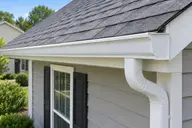 Seamless vs sectional gutters: which should you get?Seamless gutters cost about $6 to $50 a linear foot installed, sectional about $3 to $35. Fewer joints means fewer leaks. Materials, sizes and what to ask.
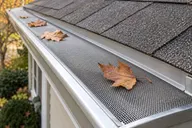 How much do gutter guards cost, and are they worth it?Gutter guards cost about $653 to $2,459 installed, or $6 to $13 a foot; professional systems run $3,000 to $9,000. Types, cleaning costs and payback.
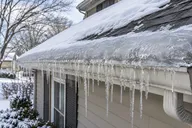 What causes ice dams, and how do you stop them?Ice dams form when attic heat melts roof snow that refreezes at the eaves. How to remove one safely, what not to do, and how to stop them coming back.
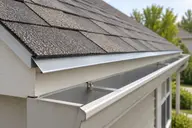 Drip edge vs gutter apron: what's the difference?Drip edge is required at shingle eaves and rakes by the model code; a gutter apron reaches into the gutter. About $1.50 to $3 a foot during a reroof.
 How to find and fix a roof leak, and what it costsA roof leak repair typically costs $350 to $1,500, about $800 on average. How to trace a leak from the attic, what to do first and what each fix costs.