
A shingle wind rating is a lab result, not a promise about your roof. Two ASTM standards produce the numbers you see on a package. ASTM D3161 blows air from a fan at shingles for two hours, at 60 mph for Class A, 90 mph for Class D or 110 mph for Class F. ASTM D7158 calculates the uplift a shingle can resist and sorts it into Class D, G or H, where H is the highest. A shingle with a top class still depends on being sealed and nailed correctly, and IBHS found that even top-rated shingles can come unsealed with age. Use the rating to compare products, then read the wind warranty and ask how the roof will be installed.
The two tests, side by side
Packages and data sheets cite one or both. The table sets out what each test does.
| ASTM D3161 | ASTM D7158 | |
|---|---|---|
| Method | A fan blows air across shingles installed on a test deck | A calculation of wind uplift force compared with the shingle's measured resistance |
| Classes | A (60 mph), D (90 mph), F (110 mph) | D, G, H |
| Highest class | F | H |
| Duration | Two hours at the test speed | Not a timed test |
| What it measures | Whether any part of a shingle lifts | The shingle's adhesive bond and its stiffness and design together |
Professional Roofing, the magazine of the National Roofing Contractors Association (NRCA), says D3161 tests at least two specimens, and a specimen that shows damage, including a sealed tab that comes apart, fails. ARMA, the asphalt roofing manufacturers' association, says the class is the highest speed reached without any part of a shingle lifting.
D7158 classes and the mph confusion
You will see different speeds for the same class. That is not a typo; the standard changed.
- Professional Roofing describes the 2016 edition: Class D up to 115 mph, Class G up to 150 mph and Class H up to 190 mph, based on ultimate design wind speeds.
- The original 2005 edition used lower numbers: 90, 120 and 150 mph.
- ARMA's current page cites the 2024 edition and gives basic wind speeds, as a three-second gust, of up to 116 mph for Class D, up to 155 mph for Class G and up to 194 mph for Class H.
A manufacturer bulletin from 2012 still uses the older numbers and calls them theoretical. So when a package says "Class H, 150 mph," it may be quoting an older edition. Ask which edition, or look at the class letter, not the mph. We have not found a single published figure that every source agrees on, so we show them side by side.
What the numbers do not promise
They are not a forecast for your roof. The D3161 standard itself says its results do not directly correlate to the wind speeds experienced in service, Professional Roofing reports, and the test makes no allowance for building height or exposure. A "110 mph" shingle is not a roof guaranteed to survive a 110 mph storm.
D7158 has conditions. ARMA says its classes apply under standard conditions: exposure category B or C, a mean roof height of 60 feet or less, no topographic wind speed-up, and a mapped design wind speed no higher than the class. Outside those conditions, a design calculation is needed and ARMA says to consult the shingle manufacturer. That mostly matters for tall buildings and exposed sites; ask your roofer if yours is one.
They describe a new shingle. ARMA says its standards apply to shingles as manufactured, do not evaluate performance after storage or installation, and that lab tests do not fully replicate real conditions. The IBHS ten-year study, published September 22, 2026, kept rated shingles on test roofs. Every product it tested carried the industry's top wind classification, yet their aged performance varied greatly, and most began to decline between years five and ten. IBHS concluded that the initial rating does not fully predict long-term wind performance.
They are not the warranty. A wind warranty states a speed and a term, with conditions. The lab class is a separate fact. In its 2012 bulletin, IKO says its Class H compliance in no way changes the coverage of its limited wind warranty. Read the warranty itself; our roofing warranties guide explains what to look for, and the architectural vs 3-tab guide compares how wind warranties differ between shingle types.
Why installation decides the result
ARMA says wind performance depends on proper installation according to the manufacturer's instructions, and that the tests run on shingles installed per the manufacturer's requirements. It says the sealant strip must perform for the installation to act as an integrated system, and that mechanical fastening to the deck completes the uplift load path.
IBHS calls the strength of the seal between shingles the most important factor for self-sealing shingles in high wind. It says ARMA recommends hand-sealing for slopes steeper than 12 in 12 or when shingles go on in very cold weather, and that hand-sealing is not common practice for winter or steep-slope work. InterNACHI, the home inspectors' association, lists the adhesive bond first, and the number and placement of fasteners second and third, among the factors that prevent wind damage.
This is why two identical roofs can behave differently. A rating tells you what the shingle can do in a lab. The roofer's work, and the weather during installation, decide whether it does it on your house. Ask these before you sign:
- Which shingle and which wind class and edition does the estimate name?
- Does the wind warranty need specific accessories, such as the maker's own starter strips or ridge caps?
- Will any shingles be hand-sealed, given the slope and the season?
- Who inspects the nailing, and is it written into the contract?
Our questions to ask a roofer guide has more. Impact ratings are a separate rating; see impact-resistant shingles.
What it means for a repair
Ratings apply to a roof as built. A repair puts new shingles into an old field, and a new shingle that rests loose with no seal has lost much of what its rating describes. If a storm has lifted or creased shingles, see what wind-damaged shingles look like and cost to fix. For the first hours after a storm, read our storm damage guide, and for repair prices, the shingle repair cost guide.
Frequently asked questions
Is Class H better than Class F?
They are different tests, so they do not compare directly. F is the top class of the fan test and H is the top class of the uplift calculation. A package may carry both.
Does a higher wind rating mean fewer shingles blow off?
Not by itself. IBHS found that all the products in its ten-year study had the top wind classification and yet differed greatly after aging. The seal and the installation matter at least as much.
What is the difference between a wind rating and a wind warranty?
A rating is a lab classification of the shingle. A warranty is the maker's written coverage, with its own speed, term and conditions. IKO says its Class H compliance does not change its wind warranty.
Do 3-tab and architectural shingles have different ratings?
Often they list the same classes. The warranty and the installation requirements are where they differ, as our architectural vs 3-tab guide shows.
Why do different websites give different mph for the same class?
The D7158 standard has been revised, and each edition states its speeds on a different basis. Older product literature may quote the older numbers.
Where this information comes from
HomeAnvil does not yet publish price data of its own. Every claim on this page comes from a published source, read on October 13, 2026. We name no brands of shingle to buy. This page is general information, not an engineering opinion.
- Mark S. Graham, The wind resistance of shingles, Professional Roofing (NRCA's magazine), September 2018: D3161 classes, speeds and duration, D7158 classes in the 2016 and 2005 editions, and the limits of both.
- ARMA, Using ASTM D7158 where standard conditions do not apply, March 2026: class speeds in the 2024 edition, standard conditions, sealant strips and fastening.
- ARMA, Asphalt shingle product and test standards: how D3161 and D7158 work, tests of shingles as manufactured, and installation per manufacturer instructions.
- IKO, Residential information bulletin R-68, ASTM D7158 Class H, August 2012: the older D7158 speeds and the point that the class does not change the wind warranty.
- IBHS, asphalt shingle wind performance after 10 years of aging, September 22, 2026. IBHS, Wind uplift of asphalt shingles: seal strength and hand-sealing.
- InterNACHI, Mastering roof inspections: asphalt composition shingles, part 50: factors that prevent wind damage. The page carries no date.
We will update this page when these sources are revised.
Related guides
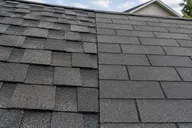 Are architectural shingles worth it over 3-tab shingles?Architectural shingles start near $3.50 a square foot against $1.50 for 3-tab, last about 30 years instead of 20, and carry longer warranties.
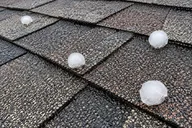 Are Class 4 impact-resistant shingles worth it?Class 4 shingles pass a 2-inch impact test under UL 2218 or FM 4473. IBHS found top-rated ones cost about 9% more per square. What the rating does not promise.
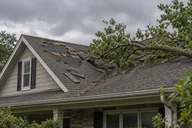 Storm damage to your roof: how to tell and what to doWind damage usually starts at a roof's edges. How to spot lifted, creased and missing shingles and debris damage, and what to do in the first 72 hours.
 What does a roof warranty actually cover?A shingle warranty covers manufacturing defects, a contractor's warranty covers installation. How prorating, wind, algae, transfers and voiding work.
 How much does it cost to replace missing shingles?Replacing a few missing or damaged shingles usually costs $150 to $700. A bundle costs $25 to $40. When a patch becomes a section or a new roof.
- What do wind-damaged shingles look like and cost to fix?Wind-damaged shingles are lifted, creased or missing. A few usually cost $150 to $700 to fix; here is how to spot the damage and when it is an insurance claim.
- What is an asphalt shingle roof, and is it right for you?Asphalt shingles are the most common home roof. 3-tab starts near $1.50 a square foot, architectural near $3.50. Life, wind, hail and warranty compared.