
A new roof should not leak, and when one does, the cause is usually in how it was put on rather than in the shingles. The usual suspects are the metal flashing at walls, chimneys and vents, nails that were placed or driven badly, and the layers under the shingles. Some "leaks" on new roofs are not roof leaks at all: warm, damp air from inside the house can condense in the attic and drip. Work out which you have, write down what you see, and tell your roofer in writing before anyone repairs anything.
This page helps you narrow down the cause and decide who to call first. It is general information, not legal or insurance advice.
The most likely causes, in the order roofers look
| Cause | What it looks like | Why it happens |
|---|---|---|
| Flashing | A stain or drip near a wall, chimney, skylight, vent pipe or valley | Metal left out, too small, put on in the wrong order, or held on with sealant alone |
| Nails | A stain under a spot where a nail head shows, or a lifted shingle | Nails driven too high, too deep or not deep enough, or too short to pass through the deck |
| Underlayment | Water at the eaves or low-slope areas, or in the first heavy rain after the work | A fault in the layers under the shingles, or a deck that got wet during the work |
| Condensation | Damp or frosted wood in the attic, drips in cold weather, no link to rain | Humid indoor air reaching a cold roof deck |
| Something else on the roof edge | A stain along an outside wall | A gutter, siding or masonry fault the roofing work did not touch |
The sections below take each in turn. None of this tells you for certain what is wrong with your roof. Only someone who inspects it can do that.
Flashing is the first place to look
Flashing is the sheet metal that seals the joints in a roof: where it meets a wall, a chimney, a skylight or a pipe, and along the creases between slopes. Owens Corning's installation instructions for its shingles say step flashing at a sidewall or chimney should be corrosion-resistant metal at least 4 by 4 by 8 inches, and 2 inches wider than the shingle exposure (July 2026). The same instructions say the maker is not responsible for problems that come from any departure from them.
Leaks at flashing tend to show up near the feature, but water travels, so the stain on your ceiling may be some distance away. Our guide to roof leak repair explains why the wet spot is rarely right under the hole. For what each kind of flashing does and how it fails, see skylight and chimney flashing.
InterNACHI, a home inspectors' association, treats an attic inspection as the best way to check penetrations such as plumbing vents, fans and skylights, because improper flashing and deteriorated seals often show water intrusion that you cannot see from outside. It also says water stains on the underside of the roof deck can mean past or current leaks, and that rusty nails poking through the deck suggest moisture has been a long-running problem.
Nails and fasteners
Owens Corning's instructions say nails must go through the marked fastening area, reach at least three-quarters of an inch into a wood deck or pass through it by at least a quarter inch, and be driven flush rather than too deep or left standing up. Nails that miss those marks can leave a path for water or let a shingle lift.
InterNACHI says overdriven nails, which are common with air-powered nail guns, cut into the shingle, while underdriven nails stand proud and can wear a hole in the shingle above. It also says exposed nail heads corrode, and that movement of the roof can enlarge the hole enough to leak. Manufacturers it cites treat caulking over a nail head as a temporary fix.
IKO, a shingle maker, says a nail can pop above the surface when it was underdriven, when it did not fully pass through the sheathing, or when the deck warps. IKO says a popped nail should not be hammered back or re-nailed in the same hole, because water can still get through.
Nail problems do not always leak at once. InterNACHI says nails placed above the adhesive strip reduce a shingle's wind resistance. The Owens Corning instructions say that in cold weather, below 40 degrees Fahrenheit, shingles around the edges of the roof must be hand-sealed with asphalt cement, because the factory adhesive may not activate. See our guide to signs of a bad roofing job for nailing and other workmanship defects.
Underlayment and the layers beneath
Shingles shed most water, and the underlayment under them is a second layer of protection. The Asphalt Roofing Manufacturers Association (ARMA) describes underlayment as a secondary layer beneath the shingles that protects the deck from wind-driven rain, and says shingles should go on as soon after the underlayment as possible. Owens Corning's instructions also say the installer must keep the wood deck from getting wet before, during and after installation. A leak in the first big storm, especially at low slopes or eaves, makes underlayment worth a question to your roofer. Our guide to roof decking and underlayment explains what goes under the shingles and what the layers do.
Is it a leak or condensation?
Condensation can look a lot like a leak: stained wood, damp insulation, drips. The tell is that it follows temperature and humidity, not rain.
The Building America Solution Center, a U.S. Department of Energy program, says attic moisture often comes from humid indoor air escaping through gaps in the ceiling. It lists recessed lights, wiring and pipe penetrations, attic hatches and exhaust fan openings as common paths, and says condensation often forms as frost that melts when it warms. It suggests keeping indoor humidity between 30 and 50 percent in the heating season.
A U.S. Department of Energy guideline adds that a bathroom fan or dryer vented into the attic can dump humid air there, and that the cold roof surface gives that moisture a place to condense. Poor ventilation matters too. NRCA says manufacturer warranties may make coverage conditional on minimum ventilation, and Owens Corning's warranty excludes damage from inadequate ventilation. Our guide to roof ventilation covers the basics.
Signs that point to condensation rather than a leak:
- Damp or frosted wood in the attic in cold weather that dries when it warms.
- Drips that do not line up with rain.
- Moisture spread across a wide area of the deck instead of one spot.
- A bathroom or dryer vent that ends in the attic.
If you are unsure, ask your roofer or an independent inspector to look at the attic during or just after a rainstorm and again on a cold, dry day.
What to record before anyone touches it
- Date every observation. Note when the leak started, the weather before it, and which rooms and walls are wet.
- Take photos. Get wide shots and close-ups of stains, drips and the attic, with something in frame to show scale.
- Keep the paperwork together. That means the contract, the invoice, the permit, any warranty documents and every message with the roofer. The FTC advises keeping a copy of any warranty and the receipt, since the receipt shows the purchase date.
- Do not let anyone repair or replace shingles first. Owens Corning's warranty says a claim may be denied if you repair or replace its products before the company has decided on the claim.
If water is coming in now, protect the house first. Our guide to emergency roof repair covers temporary protection and what it costs. Do not climb onto the roof to inspect it yourself.
Who to call first
Call the roofer who did the work, in writing. Email is fine; the FTC suggests certified mail with a return receipt when a warranty problem is not resolved, so you can prove delivery. Say what you see, attach your photos and ask for a date to inspect.
Which warranty applies depends on the cause:
| Cause | Usually handled by | Why |
|---|---|---|
| Flashing, nailing, underlayment or other installation faults | The roofer's workmanship warranty | NRCA says the manufacturer's warranty covers defects in manufacturing, not installation |
| A defective shingle | The shingle maker's warranty | That is what it is for, but read its limits and notice period |
| Wind, hail or a fallen branch | Your homeowners insurance | Owens Corning's warranty lists storm damage and objects falling on the roof as exclusions |
| Condensation from indoor humidity | You, with a ventilation or air-sealing fix | The shingle warranty excludes inadequate ventilation, and that is not an installation defect by itself |
NRCA says most contractors give one or two years of workmanship coverage and that there is no industry standard, so find your contract's wording. The Owens Corning warranty we read says a claim must be made within 30 days after you discover the problem, and that the maker's remedy is repair or replacement of covered shingles, with exclusions for non-Owens Corning flashing, pipe boots and nails. Other makers differ. Our guide to what a roof warranty covers explains how to read these documents.
If the roofer will not respond or will not fix it, the FTC says you can report the problem at ReportFraud.ftc.gov and to your state attorney general, and contact your local consumer protection office. For a large loss, ask a lawyer about your options. A second roofer's written report on the cause helps in any of these steps.
What fixing it usually involves
You do not need to know the method, but you can judge an offer. A good repair finds the actual source, fixes it properly and tells you what was wrong. Be cautious of a fix that is only a smear of sealant or roofing cement over a nail head or a joint, which manufacturers and inspectors treat as temporary. Ask what was found, ask for photos of the problem, and ask whether the repair keeps your warranty. For repair costs, see our guide to roof repair cost.
Frequently asked questions
Is it normal for a new roof to leak?
No. A leak on a new roof points to an installation fault, a damaged part, or moisture that is not coming from outside. Report it quickly.
Will the shingle manufacturer pay for a leak on a new roof?
Only if the cause is a covered defect in the shingle itself. NRCA says manufacturer warranties cover defects in manufacture, and Owens Corning's excludes improper installation. Most new-roof leaks are an installation issue, so the contractor's workmanship warranty is the first thing to check.
How long do I have to report a leak?
It depends on the document. The Owens Corning warranty we read asks for a claim within 30 days after you discover the problem. Your workmanship warranty may run one or two years, and has its own notice terms. Do not wait.
Could a gutter problem look like a roof leak?
Yes. A gutter or downspout problem can put water against a wall or the roof edge, and Owens Corning's warranty lists improperly designed or installed gutters among the causes it does not cover. Have the inspector look at the gutters too.
Will my homeowners insurance cover it?
It may cover sudden damage from a storm or the water damage a leak causes inside, but policies vary and often exclude faulty work. Read your policy and ask your agent. Our guide to roof insurance claims explains the process in general.
Where this information comes from
HomeAnvil does not publish inspection or price data of its own. Each fact on this page comes from the source named beside it, all read on October 13, 2026:
- Owens Corning, Duration series shingles installation instructions, July 2026: step flashing size, nail depth and placement, cold-weather hand-sealing, keeping the deck dry and the maker's disclaimer.
- Owens Corning, Duration shingles limited lifetime warranty: the 30-day claim period, the repair-before-decision rule and the exclusions.
- NRCA, resources for consumers: manufacturer versus contractor warranties, one to two years of workmanship coverage and ventilation conditions.
- InterNACHI, mastering roof inspections: asphalt composition shingles, part 26, and what your attic reveals about your roof: nailing faults, exposed fasteners, stains, rusty nails and penetrations. Neither page carries a date.
- IKO, a guide to roofing nails for asphalt shingles, October 31, 2025: how nail pops happen and what not to do.
- ARMA, steep slope roofing underlayment: underlayment as secondary protection and applying shingles soon after it.
- Building America Solution Center, U.S. Department of Energy, condensation control in attics and roofs in cold weather: air leaks, frost and indoor humidity.
- U.S. Department of Energy, Building America, measure guideline: air sealing attics, June 2012: humid air from fans and dryers and condensation on a cold roof.
- FTC Consumer Advice, warranties: keeping records, certified mail and where to report.
Building codes and warranty terms differ by product, contract and place. We will update this page when these sources change, and the date above will say when.
Related guides
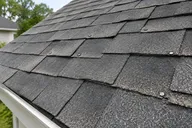 Signs of a bad roofing job, and what to do about itWavy shingle rows, high or exposed nails, missing flashing or drip edge and first-year blisters point to poor work. How to document it and use your warranty.
 What does a roof warranty actually cover?A shingle warranty covers manufacturing defects, a contractor's warranty covers installation. How prorating, wind, algae, transfers and voiding work.
 How to find and fix a roof leak, and what it costsA roof leak repair typically costs $350 to $1,500, about $800 on average. How to trace a leak from the attic, what to do first and what each fix costs.
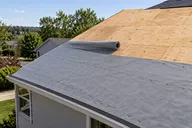 Roof decking and underlayment: what they are and costReplacing roof decking costs $2 to $5 a square foot; a sheet of plywood or OSB runs $9 to $64. How the deck, underlayment and ice barrier work.
 How much attic ventilation does a roof need?Code calls for 1 square foot of net free vent area per 150 square feet of attic, split between intake and exhaust. How vents work, warning signs and costs.
 What happens during a roof replacement, step by step?An asphalt shingle roof usually goes on in one to three days. What happens before, during and after, from tear-off and deck repair to flashing and cleanup.