
If your home is in a homeowners association (HOA), you very likely need its approval before a new roof goes on, even when the new roof matches the old one. Your governing documents decide, not this page. Most governing documents require approval of exterior changes, and the review usually takes 30 to 45 days by the deadlines they set, with whole-process estimates of 30 to 90 days from one roofing company's guide. Start the application before you sign a contract, and do not start work until the approval is in writing.
This page is general information, not legal advice. For a dispute with your association, read your own documents and consider speaking with a lawyer.
Why you need approval
A homeowners association gets its power from the documents you agreed to when you bought: the covenants, conditions and restrictions (CC&Rs), plus any separate architectural guidelines. CHDB Law, a law firm, said in an article published August 7, 2026 that most governing documents require owners to receive committee or board approval before they change the outside of a home. CAMS, a management company, explains that the architectural committee cannot make decisions that are looser than the CC&Rs.
Roofs are on the list for a clear reason: they are most of what the street sees. RealManage, another management company, says even a like-for-like replacement may need approval if the materials, colors or dimensions change, even slightly. Do not assume that "same as before" is exempt. Read the documents or ask your management company.
A city permit does not replace it. CHDB Law says both are usually required. The permit shows the work meets building code; the HOA approval shows it meets the community's rules. Our guide to roof replacement permits covers the first, and the two approvals can run at the same time.
What your governing documents may say about roofs
Roofing company guides list the same set of rules. RoofVista, a roofing company, in a guide published March 15, 2026, says to look for:
- Approved materials, colors, profiles and brands.
- Contractor requirements, such as licensing, insurance and any list of approved contractors.
- Work hours, dumpster placement and completion deadlines.
- Emergency repair rules.
- How variances, appeals and fines work.
If your documents are silent on a point, ask the association in writing. Our guides to roof colors and roofing materials help you choose among options an association is likely to accept.
What an application usually contains
Every association sets its own form. Two secondary sources, RealManage (May 5, 2026) and RoofVista (March 15, 2026), list items that come up often:
| Item | Why they ask |
|---|---|
| The association's request form, filled in | Most require a written request in the way the documents specify |
| Project description and scope | So reviewers know what is changing |
| Material details: maker, product line, color name, and a sample | To compare against the approved list |
| An estimate from the contractor, sometimes more than one | RoofVista says at least one |
| Contractor license and proof of insurance | Many documents require them |
| Dates, work hours and dumpster plans | To manage neighbors and the street |
| Photos of the product on similar homes, for unusual materials | To support a variance |
| Dated copies of everything you submit | So there is a record |
These are lists from management and roofing sources, not a legal standard. Your association may want less or more. An incomplete application is the easiest way to lose weeks, so ask what the checklist is before you send it. Our guides to comparing roofing estimates and checking a contractor help you put the contractor's side of the application together.
How long it takes
| Source | What it says | Kind of source |
|---|---|---|
| RealManage, May 5, 2026 | Committees typically have up to 30 days to review | Management company |
| RoofVista, March 15, 2026 | Response deadlines often 30 to 45 days; whole process 30 to 90 days | Roofing company, its own estimate |
| Your CC&Rs | The actual deadline that binds your association | The only one that counts |
Treat the 30 to 90 day figure as one company's estimate, which the guide does not back with a cited study. Timelines stretch because committees often meet only monthly, so a missed meeting can add weeks, and a request for more information restarts the review. CAMS notes that some governing documents treat a request as approved if the owner gets no answer by the deadline. Check yours before you rely on that. Do not count silence as approval unless the document says so.
Approvals can also expire. RoofVista says most last 60 to 180 days, so a long delay in booking the crew may mean resubmitting. Ask the roofer for a realistic start date; our guide to the roof replacement process shows how the schedule is built.
If your request is denied
Read the written explanation first. CAMS says a denial should be explained clearly in writing and that the board can approve with conditions. Your options, from lightest to heaviest, as RoofVista and RealManage describe them:
- Revise and resubmit. Change the color or product to match the list, with more detail.
- Ask for a variance. This is a request for an exception for a material or color not on the list, and it may need a full board vote.
- Appeal to the board. RoofVista puts an internal appeal at about two to four weeks.
- Mediation or a complaint to an agency. RoofVista gives rough prices and times for these. Rules differ by place, so check yours.
- A lawsuit. RoofVista calls this a last resort and says it costs far more.
Those costs are one company's estimates. A lawyer who handles association disputes can tell you what applies to you.
What happens if you start without approval
RealManage lists violation notices, fines, stop-work requests, required changes and removal of unapproved work. RoofVista says daily fines are typical, at $25 to $200 a day in its guide, and says unpaid fines can become a lien that affects a refinance or sale. Neither is a guarantee of what your association will do. They are the reason to wait for the letter.
A storm is different in one respect: if the roof is leaking now, tell the association about the emergency and ask what your documents allow. Our emergency roof repair guide covers what a temporary fix involves.
Frequently asked questions
Do I need HOA approval for a roof if I am only repairing it?
It depends on your documents. Small repairs that match the existing roof are often fine, but RealManage says a change in material, color or dimensions can trigger review. Ask in writing.
How long does HOA approval for a roof take?
Review deadlines in governing documents are often 30 to 45 days, and one roofing company's guide estimates 30 to 90 days for the whole process. Your documents set the real deadline.
Who submits the application, me or the roofer?
Usually you, as the owner, with the contractor's details attached. Some roofers help with the paperwork. Ask before you sign.
Can the HOA make me use a certain color or brand?
If your documents say so, yes: associations commonly keep lists of approved materials and colors. If your choice is not on the list, a variance request is the route.
Does the HOA decide whether insurance pays?
No. Insurance is between you and your insurer. If a storm damaged the roof, see our guide to how a roof insurance claim works, and keep the association informed of your plans.
Where this information comes from
HomeAnvil does not yet publish data of its own. We read these sources on October 13, 2026. Most are management company, law firm and roofing company guides, so they are secondary sources, and none of them is about your association.
- CHDB Law LLP, architectural changes: why approval matters before you build, August 7, 2026: most governing documents require approval, and a city permit does not replace it.
- RealManage, what is an architectural request, May 5, 2026: typical contents, review time, consequences and appeals.
- CAMS, understanding your community's architectural review process, June 7, 2022: governing documents, written denials, deemed approval clauses.
- RoofVista, HOA roof replacement guide, March 15, 2026: governing document items, timelines, approval validity, denial routes and fines. Its time and cost figures are the company's own estimates.
We named no state law because rules differ from place to place. We will update this page when the sources change.
Related guides
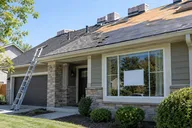 Do you need a permit to replace a roof?Usually yes, where your local code requires one. A roofing permit costs about $100 to $500, and up to $1,400 in some places. Who pulls it and what gets inspected.
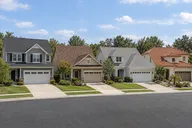 How do you choose a roof color?A light or cool-pigment roof stays much cooler in sun and can cut cooling costs 7% to 15%. How to weigh heat, siding and trim, neighborhood rules and metal finishes.
 Types of roofing materials, and how they compareRoofing materials compared: asphalt costs $3 to $7 a square foot installed and lasts 20 to 30 years; slate $15 to $30 and 60 to 150 years.
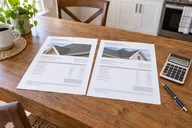 How do you compare roofing estimates?Compare roofing estimates line by line: squares, price per square, product lines, tear-off, decking, underlayment, flashing, permit, warranties and payment terms.
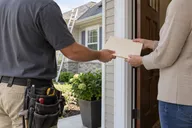 What to check before you hire a contractorFive things to ask for before you sign with a roofing, siding, window, bath or HVAC contractor, wherever you live in the United States.
 What happens during a roof replacement, step by step?An asphalt shingle roof usually goes on in one to three days. What happens before, during and after, from tear-off and deck repair to flashing and cleanup.
- What is a roof certification and what does it cost?A roof certification states your roof's condition and expected remaining life. HomeAdvisor puts it at $75 to $200; warranty-style programs charge $250 and up.
- Should you replace your roof before selling your house?Replace if the roof is near the end of its life or will block a buyer's loan or insurance. Otherwise repair, offer a credit or sell as is. How to decide, with costs.
- Should you buy a house with an old roof?An old roof is not a dealbreaker if you price it in. Check its remaining life, your loan and insurance, then ask for a credit, a repair or a lower price. Costs inside.