
The right gutter guard depends on what falls on your roof. Micro-mesh blocks the finest debris, including pine needles and shingle grit. Reverse-curve covers shed leaves well on steep roofs but let small debris in. Plain mesh screens stop large leaves, and foam and brush inserts suit light debris only. No type is maintenance-free, and none is best everywhere. This guide explains how each works, what each misses, and how to match one to your trees and roof. It does not rank products or brands. For prices, see what gutter guards cost.
The types at a glance
| Type | How it works | What it misses | Best fit | Material cost per foot |
|---|---|---|---|---|
| Plastic screen | A coarse screen snaps onto the gutter | Small debris; can blow off in wind | Mild climates, large leaves | $0.40 – $1 |
| Metal mesh or perforated screen | A metal sheet or expanded mesh with holes | Dirt, pine needles and seeds can pass | Mostly large debris | $1.50 – $3.50 |
| Micro-mesh | A very fine stainless mesh over a frame | Debris can sit on top; snow and ice can build up | Pine needles, shingle grit, pollen | $2 – $4 |
| Foam | A foam block fills the gutter | Needs yearly cleaning; can grow organisms | Light debris, dry climates | $2 – $3.50 |
| Brush | Bristles sit in the gutter | Needles, seeds and grit catch or pass | Larger debris, light cover | $3 – $4.25 |
| Reverse curve (surface tension) | A solid cover curls back so water clings and enters a slot while leaves fall off | Small debris; heavy downpours | Steep roofs, heavy leaf fall | whole-system price, not per foot |
Sources: This Old House (updated October 8, 2026), HomeAdvisor (June 17, 2026) and Fixr (January 31, 2025). The per-foot figures are HomeAdvisor's material costs, before labor. Where sources disagree, the table shows the wider fit.
Screens and mesh
A screen works like a screen door: water goes through the holes and leaves stay on top. HomeAdvisor says the holes are large enough that small debris gets through now and then, and that plastic screens can blow away in high wind. Fixr says plastic screens last roughly three to six years and may warp or fade in the sun.
Metal mesh is sturdier. Fixr says expanded metal blocks leaves, twigs, seed pods and fruit, but its openings are not fine, so some small debris still passes. This Old House says perforated screens leave dirt, pine needles and seeds free to pass.
Micro-mesh
Micro-mesh uses a very fine layer, usually stainless steel, so that only water passes. Fixr describes two layers, a wider mesh under a very fine one. HomeAdvisor says it blocks debris of all sizes, and This Old House says it suits pine-heavy yards, shingle grit and pollen.
The weaknesses are on top. This Old House says flat designs can collect debris on the surface, and snow and ice can build up there. HomeAdvisor says micro-mesh often needs professional installation. Fixr lists it as the priciest mesh option.
Foam inserts
Foam fills the gutter. Water soaks through while debris stays on top. HomeAdvisor says foam needs cleaning every year, and Fixr warns that it can harbor spores and bacteria that lead to algae, fungus and odors. This Old House says foam suits dry climates with little debris and gives it 2 to 5 years of life with high maintenance.
Brushes
A brush is a long cylinder of bristles laid in the gutter. HomeAdvisor says it struggles with small debris such as maple seeds and pine needles, and Fixr says small debris catches in the bristles and needs occasional cleaning. This Old House says shingle grit, needles and seeds pass through, and gives brushes 3 to 5 years of life.
Reverse-curve and surface-tension covers
A solid cover curves over the front of the gutter. Water follows the curve and enters through a narrow opening, and debris slides off. HomeAdvisor says they handle heavy leaf fall but struggle in heavy downpours. This Old House says large debris falls away well but pine needles and seeds can fall into the gutter, and says the design suits steep roofs. Fixr says stuck debris may need sweeping off with a broom.
Some covers can shed fast water over the edge in heavy rain. Ask an installer how a cover handles the roof area draining into it.
Match the guard to your trees
This Old House (updated June 17, 2026) ties the benefit of guards to the trees nearby:
- Oaks, maples and other broad-leaved trees. Guards help most here because they catch large leaves and branches.
- Pines and firs. Needles can slip through or lodge under a cover, so guards make less difference. Micro-mesh suits fine debris like needles.
- Few trees. Guards are generally not needed. Seasonal cleaning is usually enough.
- Flowering trees and pollen. This Old House's guard review says micro-mesh does better against pollen buildup.
Match the guard to your roof and weather
- Steep roof. This Old House says reverse-curve designs work well.
- Low slope. It says micro-mesh is often the better choice.
- Metal roof. This Old House says stainless steel guards cope best with snow and ice sliding off.
- Slate or solid tile. HomeAdvisor says these make guard installation more complicated, and that some guards only work with certain shingles.
- Snow and ice. This Old House says guards can freeze over, slowing drainage until the temperature rises. They add surface and pockets where moisture can collect, and they can contribute to ice dams. No guard prevents ice dams; the cause is in the attic. Read what causes ice dams.
- Shingle grit. This Old House says micro-mesh or reverse-curve designs handle it better than screens or brushes. New shingles shed more grit in their first years.
Also ask where the guard attaches. Some fasten under the bottom row of shingles, and that can affect your roof's warranty. Our guide to roofing warranties explains what to check.
Questions for the installer
- What type of guard is it, and what is it made of?
- What debris will it let through on my property?
- Does it attach to the gutter, the fascia or under the shingles?
- How often do you expect it to need cleaning, and how do I do that safely?
- What does the warranty cover, and does it transfer if I sell?
- Are my gutters sound? Our guide to gutter materials helps you judge whether they should be replaced first.
Guards reduce cleaning and do not remove it. In This Old House's survey, about 30 percent of owners with guards no longer cleaned their gutters and 41 percent cleaned once a year. This page is general information, not a product recommendation.
Frequently asked questions
Which gutter guard is best for pine needles?
Micro-mesh, according to This Old House and HomeAdvisor. Screens, brushes and reverse-curve covers can let needles through.
Do gutter guards stop shingle grit?
Partly. This Old House says micro-mesh and reverse-curve designs handle grit better than screens and brushes.
Do gutter guards work in snow?
They can freeze over, and none prevents ice dams. This Old House says micro-mesh and surface-tension designs may let snowmelt flow more freely, so ask about your climate.
Can I install gutter guards myself?
Screens, foam and brushes are made to be simple to fit, but a ladder is the main risk, and This Old House advises a professional for tall or steep roofs. Reverse-curve covers and micro-mesh usually need a professional, according to HomeAdvisor.
Do I still need to clean gutters with guards?
Yes. HomeAdvisor says debris can sit on any type of guard, and our cost guide covers how often cleaning is typically needed.
Where this information comes from
HomeAnvil does not sell guards or publish test data. This guide compares published descriptions, read on October 13, 2026, and names no brands.
- This Old House, best gutter guards, updated October 8, 2026: how each type works, what it misses, roof fit and snow.
- This Old House, are gutter guards worth it, updated June 17, 2026: trees, snow and ice, grit, maintenance and survey results.
- HomeAdvisor, gutter guards cost, updated June 17, 2026: type descriptions, drawbacks, material costs and roof compatibility.
- Fixr, gutter guard installation cost, updated January 31, 2025: construction and drawbacks by type.
Related guides
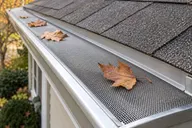 How much do gutter guards cost, and are they worth it?Gutter guards cost about $653 to $2,459 installed, or $6 to $13 a foot; professional systems run $3,000 to $9,000. Types, cleaning costs and payback.
 How much does gutter replacement cost?New gutters for an average house cost about $2,200 to $5,000, or $4 to $40 a linear foot installed. Costs by material, house size, extras, and repair vs replace.
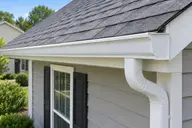 Seamless vs sectional gutters: which should you get?Seamless gutters cost about $6 to $50 a linear foot installed, sectional about $3 to $35. Fewer joints means fewer leaks. Materials, sizes and what to ask.
- Which gutter material is best: aluminum, steel or copper?Aluminum is the usual pick at about $6 to $20 a foot installed. Steel resists dents, vinyl is cheapest, copper and zinc cost $20 to $50 and last decades.
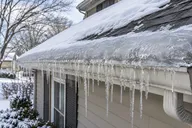 What causes ice dams, and how do you stop them?Ice dams form when attic heat melts roof snow that refreezes at the eaves. How to remove one safely, what not to do, and how to stop them coming back.
 What does a roof warranty actually cover?A shingle warranty covers manufacturing defects, a contractor's warranty covers installation. How prorating, wind, algae, transfers and voiding work.